FORM DRC-01 GST: Demand & Recovery Certificate Explained
This guide explains FORM DRC-01 under the Indian GST framework: what it is, why tax officers issue it, who it applies to, what information it carries, and the typical situations that trigger it. You will learn how to read a DRC-01, why the form matters for your GST compliance, and what to expect after a DRC-01 is issued. Understanding DRC-01 is important because it is an official ‘show cause’ communication that signals either a mismatch in Input Tax Credit (ITC) records or an assessed shortfall in tax liability, both of which can affect a taxpayer’s liability and relationship with the tax administration. The guide relies only on official, verifiable points about DRC-01 and focuses on practical clarity rather than procedural speculation. If you receive a DRC-01, this article will help you interpret its purpose, identify the elements you should look for, and understand why timely and accurate attention to the notice preserves your compliance position and helps avoid escalation.
What is FORM DRC-01 in GST?
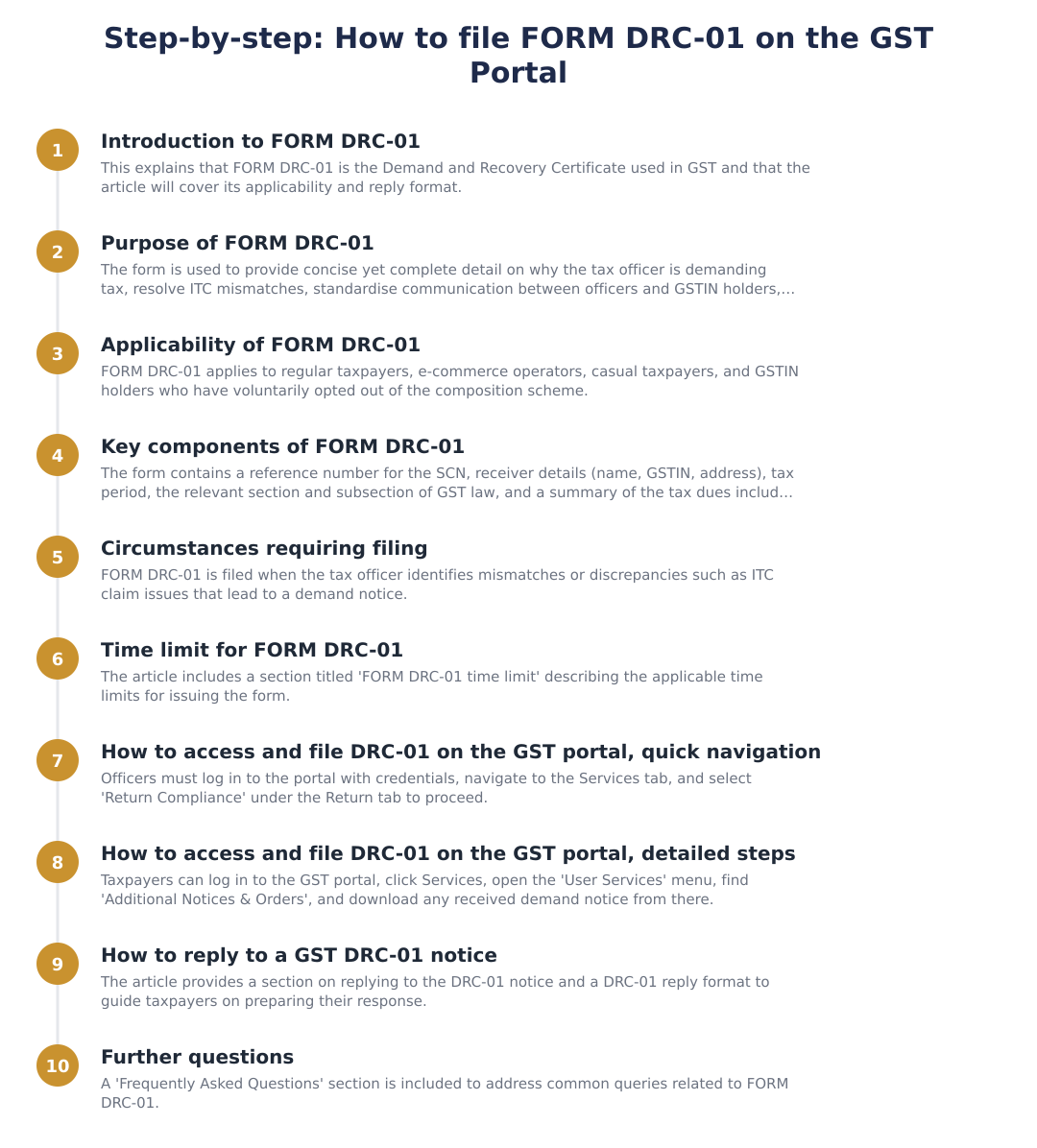
FORM DRC-01 is the Demand and Recovery Certificate used in the GST system. It is a formal instrument used by competent GST officers to communicate issues that require the taxpayer’s attention.
Legally, DRC-01 functions as a kind of 'show cause' notice, an official document that explains why tax demand or recovery action is being proposed and invites the taxpayer to respond. Each certificate is meant to be a clear notice of potential liability or discrepancy identified by tax authorities.
Purpose of FORM DRC-01
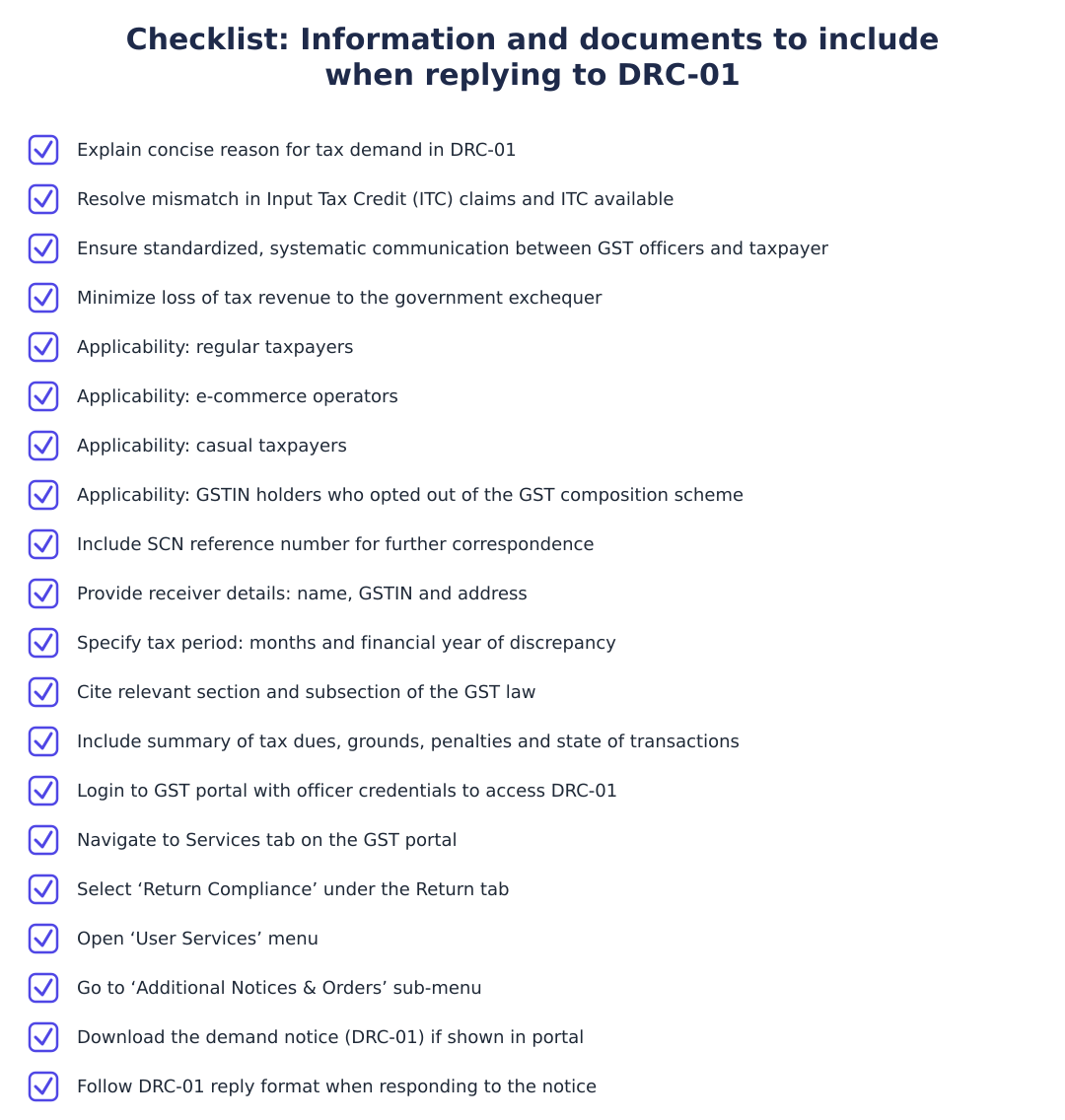
The purposes of issuing DRC-01 are to provide concise yet complete detail on why tax is being demanded, to resolve mismatches in ITC claims and available ITC, and to ensure standardised, systematic communication between GST officers and GSTIN holders. This structured communication helps taxpayers understand the basis of the proposed demand and the grounds for any recovery action.
DRC-01 also serves a revenue-protection purpose: by surfacing discrepancies and underpayments, it helps minimise loss of tax revenue to the government exchequer. In short, the form is intended both to inform taxpayers and to protect public revenue by bringing mismatches and under-assessments to light.
FORM DRC-01 applicability and who should file?
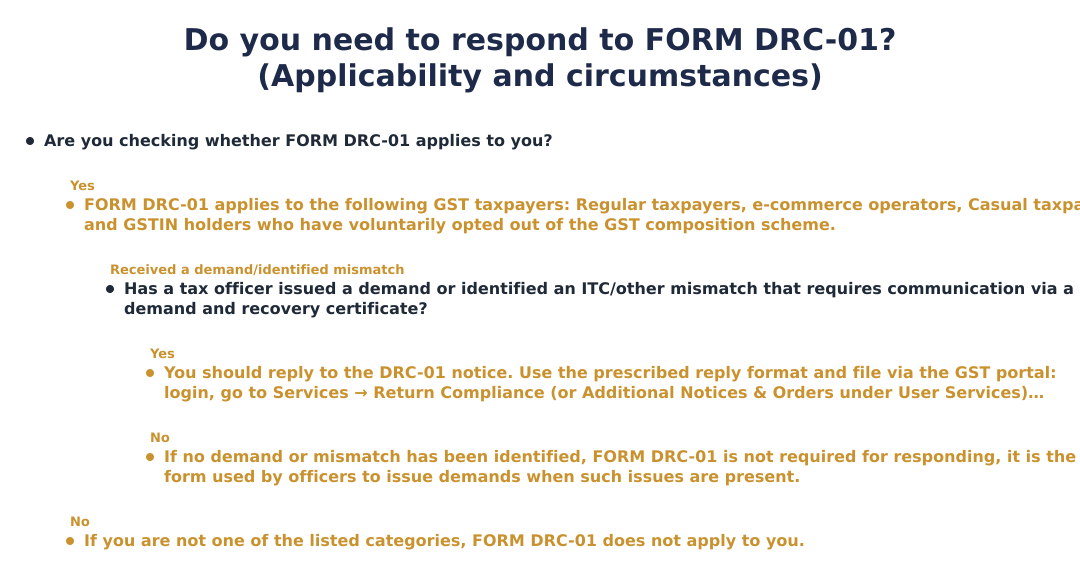
DRC-01 is issued by competent GST officers and is directed at GSTIN holders whose records show issues that warrant a demand or recovery communication. Because it is an officer-issued show cause notice, the form is issued to the taxpayer rather than filed by the taxpayer in a proactive sense.
Typical recipients include regular taxpayers and any other GSTIN holders whose returns or records show a mismatch or an underpayment identified by the authorities. The form’s issuance depends on the officer’s findings rather than voluntary action by the taxpayer.
Key components and sections of FORM DRC-01
Each Form DRC-01 contains a unique reference number that is used for tracking and future correspondence. The presence of a reference number ensures that communications and replies can be associated with the correct notice and case record.
Beyond the reference number, the document typically provides information necessary for the taxpayer to understand the demand, for example, who the notice is addressed to, the tax periods in question, and the grounds for the proposed demand. The exact layout and phrasing are determined by the issuing authority, but the core intent is to give the taxpayer sufficient detail to respond meaningfully.
Circumstances requiring FORM DRC-01 filing
DRC-01 is issued in specific situations identified by tax officers. One primary circumstance is when there is a mismatch between claimed Input Tax Credit (ITC) and the ITC actually available according to records, such mismatches prompt the issuance of a demand and recovery certificate.
Another key circumstance is when tax is found to be underpaid against the assessed liability. In both scenarios the competent officer issues DRC-01 as a formal notice to bring the matter to the taxpayer’s attention and to invite a response or rectification.
How to reply GST DRC-01 notice? DRC-01 reply format.
Because DRC-01 is an official show cause notice issued by an officer, the appropriate reply should address the issues raised in the notice and reference the unique DRC-01 reference number. The reply should focus on the grounds of demand, for example, explanations or documentation relevant to ITC mismatches or assessments of underpaid tax.
Specific formats or procedural steps for replying can vary with the issuing authority and the electronic or physical channels used for communication. Taxpayers should closely follow the instructions on the DRC-01 they receive, and ensure their response directly engages with the facts and calculations cited in the certificate.
FORM DRC-01 time limit
The verified information available on DRC-01 does not specify a universal time limit within this guide. Time limits and timelines for response or further action are typically set out in the notice itself or under the governing procedural rules applied by the issuing officer.
Therefore, when you receive a DRC-01, check the certificate and any accompanying instructions carefully for deadlines and follow the stated timelines to preserve your rights to reply and contest the demand.
FORM DRC-01 is a formal show cause demand and recovery notice used by GST officers to address ITC mismatches and underpayment of tax. Each notice carries a unique reference number and is intended to give taxpayers clear grounds for the proposed demand so they can respond. If you receive a DRC-01, review the document closely, reference the unique number in any correspondence, and respond specifically to the points raised to address the officer’s concerns and protect your compliance position.
Frequently asked questions
What is FORM DRC-01 in GST?
FORM DRC-01 is the Demand and Recovery Certificate used as a ‘show cause’ notice by GST officers to demand tax or recovery when they find discrepancies; it contains a unique reference number for tracking and further correspondence. The form is issued when there is a mismatch between claimed and available Input Tax Credit (ITC) or when tax is found to be underpaid against assessed liability. Each DRC-01 sets out the grounds of demand, the amount of tax and any penalties, the tax period in question, and the state where the transactions occurred.
Why do tax officers issue FORM DRC-01 in GST?
Tax officers issue FORM DRC-01 to formally demand payment and initiate recovery when there is evidence of tax shortfall, mismatched ITC claims, or underreporting of liability. The purpose is to communicate the grounds for demand concisely, resolve ITC mismatches, ensure standardised communication between officers and taxpayers, and minimise loss to the government exchequer. The notice typically identifies the tax period, relevant legal provisions (section and subsection), and a summary of dues including penalties and the state of occurrence.
Who is liable to receive FORM DRC-01 and who should respond?
FORM DRC-01 applies to regular taxpayers, e-commerce operators, casual taxpayers and GSTIN holders who have voluntarily opted out of the composition scheme; composition taxpayers are generally excluded. If you fall into one of the applicable categories and a mismatch or underpayment is alleged against your GSTIN, you should respond to the DRC-01. The competent GST officer may issue the form automatically (system-generated) or manually, so all affected taxpayers should monitor their GST portal communications for such notices.
What are the key components and sections of FORM DRC-01?
FORM DRC-01 contains several key fields: a unique reference number for the SCN, receiver details (name, GSTIN, address), tax period(s) under dispute, the relevant section and subsection of the GST law invoked, and a summary of demanded dues including grounds, penalties and the state concerned. This structure ensures standardised, traceable communication and helps both the taxpayer and officer refer clearly to the contested items. The summary will also list amounts claimed and any documentary basis relied upon by the officer.
In what circumstances will a DRC-01 be issued against my GSTIN?
A DRC-01 is issued when the tax officer identifies mismatches between claimed and available ITC, detects underpaid tax against assessed liability, or notices discrepancies during compliance checks and audits. It may also be issued following system reconciliation that highlights differences between returns and supplier-reported data. Essentially, any situation pointing to tax dues, improper ITC claims, or underreporting can trigger the issuance of a DRC-01.
How long do I have to reply to FORM DRC-01 (time limit)?
The DRC-01 itself specifies the time limit for reply, and you must respond within the period mentioned in the notice, commonly the period provided is 30 days from service, but always check the specific notice for the exact deadline. Missing the stated deadline may allow the officer to proceed with recovery or adjudication based on the record, so prompt action is important. If you need more time, the notice may indicate whether an extension is possible or if you must request clarification from the issuing officer.
How do I file or download FORM DRC-01 notices on the GST portal?
Taxpayers can download a received DRC-01 by logging into the GST portal, clicking Services, then User Services and selecting Additional Notices & Orders where the demand notice will appear for download. Competent GST officers file DRC-01 from their side by logging in with officer credentials, navigating to Services > Return Compliance, and choosing the relevant DRC-01 variant (DRC-01A/01B/01C) to issue the notice. Always keep a downloaded copy of the notice and note the reference number for correspondence or replies.
How should I reply to a GST DRC-01 notice, what is the reply format?
Your reply to DRC-01 should begin by quoting the DRC-01 reference number and then provide a clear, point-by-point response addressing each ground of demand raised in the notice, supported by relevant documents and reconciliations. Attach supporting evidence such as invoices, payment challans, reconciliation statements (GSTR-2A/2B comparisons), proof of ITC reversal if applicable, and any legal or factual explanations; sign the reply digitally if required. Be concise but complete, specify amounts agreed or contested, grounds for disagreement, and request any clarifications or hearings where necessary, while keeping a record of the submission and portal acknowledgement.
What should I do immediately after receiving a FORM DRC-01?
After receiving a DRC-01, download and carefully read the notice to note the reference number, the tax periods and grounds of demand, and the deadline to reply; then gather supporting invoices, reconciliations and payment evidence to prepare a point-wise reply. If you agree with the demand, arrange payment or follow procedures for deposit/recovery; if you dispute it, prepare documentary evidence and a reasoned response and submit it within the notice timeline, requesting a personal hearing if required. Also consult your tax advisor or GST practitioner promptly if complex issues or large amounts are involved to avoid adverse recovery action.
Need help staying GST compliant?
MoneyGence's AI Finance OS tracks your compliance, wallet share, and finances in one place, built for agencies and growing businesses.
Get started with MoneyGence