GST Audit: When Tax Officers Can Audit You Under GST
This guide explains how and why a GST audit may be conducted by tax officers, what kinds of audits exist in practice, how a business should prepare, and what to expect during and after an audit. For GST-registered businesses, audits are an important compliance touchpoint: they verify whether returns, input tax credits and records align with actual transactions. Understanding triggers, the scope of different audit processes, the typical obligations of the auditee, and how findings are communicated helps you reduce risk, respond calmly if selected, and implement corrective steps where necessary. This article gives practical, plain-language guidance on common audit types, how tax authorities typically carry out audits, what documentation and cooperation are expected from businesses, and how to handle audit findings. It is written for business owners, accountants, and tax teams who want to be audit-ready and minimise operational disruption if approached by tax officers.
What prompts a GST audit?
Tax authorities use audits to verify that tax returns, input tax credits and financial records reflect the taxpayer's true business transactions. While selection methods vary, common triggers include large or unusual turnover, systematic mismatches between tax returns and reported purchases or sales, inconsistencies across different tax forms, frequent amendments to returns, and data analytics flags raised by automated systems.
Businesses can also be selected for audits randomly as part of routine risk-based oversight. External events, such as complaints from other taxpayers, third‑party information, or anomalies detected during assessments or scrutiny, may likewise lead to an audit. Being aware of these triggers helps businesses prioritise record‑keeping and internal controls to reduce the chance of adverse findings.
Common types of GST audits (conceptual overview)
Audits can be routine compliance checks, desk audits based on returns and records, or more detailed field audits where officers review books and supporting documents at the taxpayer’s premises. Some audits are general in scope, covering overall compliance for a financial period; others focus on specific transactions, particular credits claimed, or sectors where risks are higher.
Another form of intensified examination involves appointing an independent professional to carry out a specialised review when the tax officer considers the records complex or finds inconsistencies that require expert evaluation. The intensity and duration of the audit depend on the identified risks and the depth of verification needed.
Obligations of the taxpayer during an audit
When notified of an audit, the taxpayer is expected to cooperate fully. This typically includes providing access to books of account, returns filed, invoices, contracts, bank statements, and any other documents the officer reasonably requires. Businesses should allocate a contact person who can coordinate with the audit team and ensure timely provision of requested materials.
Beyond document provision, taxpayers should be prepared to explain accounting policies, reconciliation logic between tax returns and financial statements, and the basis for any input tax credit claims. Professional conduct, prompt communication and organised records reduce friction and can shorten the audit process.
How audit findings are typically communicated and what they contain
At the end of an audit, authorities usually issue a written report or communication that describes the findings, the rationale for those findings, and any proposed adjustments or liabilities. The communication should also explain the taxpayer’s rights, for example, how to respond, provide clarifications, or appeal, and the next procedural steps.
Common outcomes range from no change to proposals for additional tax, interest or penalties where discrepancies are found. Businesses should review the findings carefully, consult tax advisors where necessary, and respond within the prescribed timelines with supporting evidence or representations to contest or mitigate proposed adjustments.
Preparing for and managing an audit, practical steps
Maintain organised and reconciled records: invoices (sales and purchases), credit and debit notes, ledgers, bank statements, e‑way bills where applicable, supplier details and contracts. Regular internal reconciliations between accounting books and tax returns help catch mismatches early and demonstrate proactive compliance.
Engage your tax advisor early: when an audit notice arrives, involve your accountant or GST practitioner immediately. Prepare a response plan, compile requested documents in a logical order, and prepare concise explanations for any unusual transactions. If the audit identifies genuine errors, consider corrective returns and voluntary disclosures where appropriate to reduce potential exposure.
An audit is a routine part of tax administration and, when handled proactively, is manageable. Clear records, timely cooperation, and professional guidance reduce disruption and the risk of adverse outcomes. Use audits as an opportunity to strengthen internal controls and compliance processes so future reviews are smoother.
Frequently asked questions
When can GST officers audit my business?
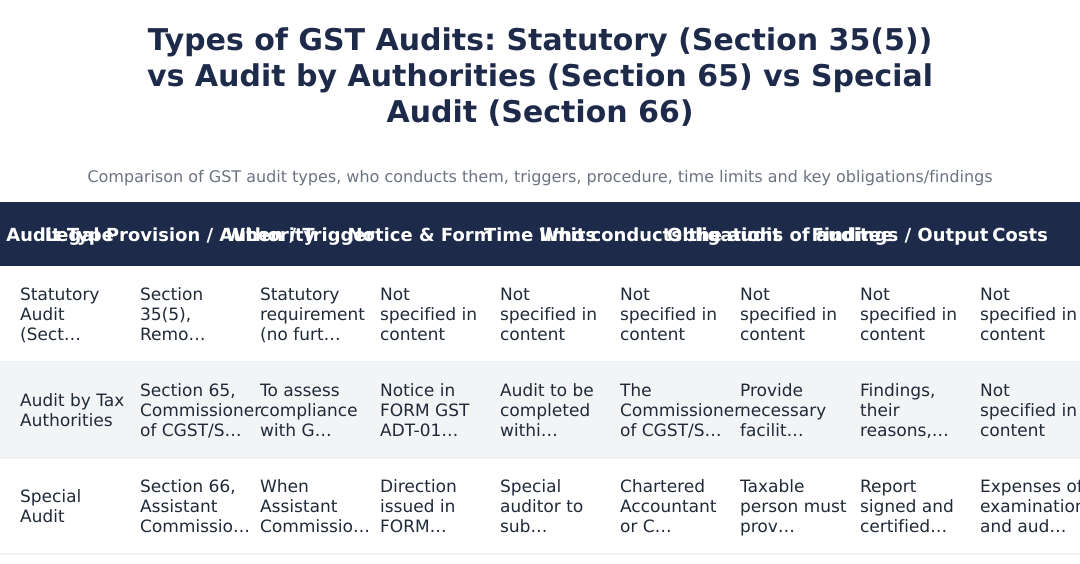
Tax officers can audit your business when they want to verify your compliance with GST law for a financial year or part(s) of a financial year. The Commissioner of CGST/SGST or any officer authorised by them may initiate an audit under Section 65 to examine turnover, tax liability, refund claims and input tax credit claims; the audit period can cover one or more financial years. You will receive a written notice in FORM GST ADT-01 at least 15 working days before the audit starts, and the audit must normally be completed within three months from commencement (extendable by the Commissioner by another six months with reasons). Audits may be triggered by discrepancies in returns, suspicious claims, notices, or routine compliance checks by the tax department.
What are the different types of GST audits I should know about?
There are three main kinds of GST audits mentioned: Statutory audit under Section 35(5) (removed w.e.f. 1 August 2021), Audit by tax authorities under Section 65, and Special audit under Section 66. Section 65 audits are conducted by the Commissioner or authorised officers to check compliance for specified periods and are initiated by a prior notice in FORM GST ADT-01. A special audit (Section 66) can be ordered by the Assistant Commissioner with prior approval if there is suspicion about correctness of declared value or wrongly availed input tax credit, and is carried out by a nominated chartered accountant or cost accountant.
Is the statutory GST audit under Section 35(5) still applicable?
No, the statutory audit under Section 35(5) was removed with effect from 1 August 2021. Prior to its removal, Section 35(5) required certain taxpayers to get their accounts audited and furnish audit reports; after the amendment this requirement under that specific section no longer applies. However, other audit mechanisms such as tax authority audits (Section 65) and special audits (Section 66) continue to operate, and taxpayers may still face audits by officers or need to submit reconciliation reports like GSTR-9C where applicable. Always check current rules or notifications as compliance obligations evolve.
How much notice will I get before a GST audit and how long will it last?
You will receive at least 15 working days' notice in FORM GST ADT-01 before the audit begins, and the audit should be completed within three months from the date of commencement. The Commissioner can extend the audit period by up to six additional months if reasons are recorded in writing. For special audits ordered under Section 66, the nominated chartered accountant/cost accountant must submit their report within 90 days, extendable by another 90 days on written request.
What are my obligations when a GST audit is conducted?
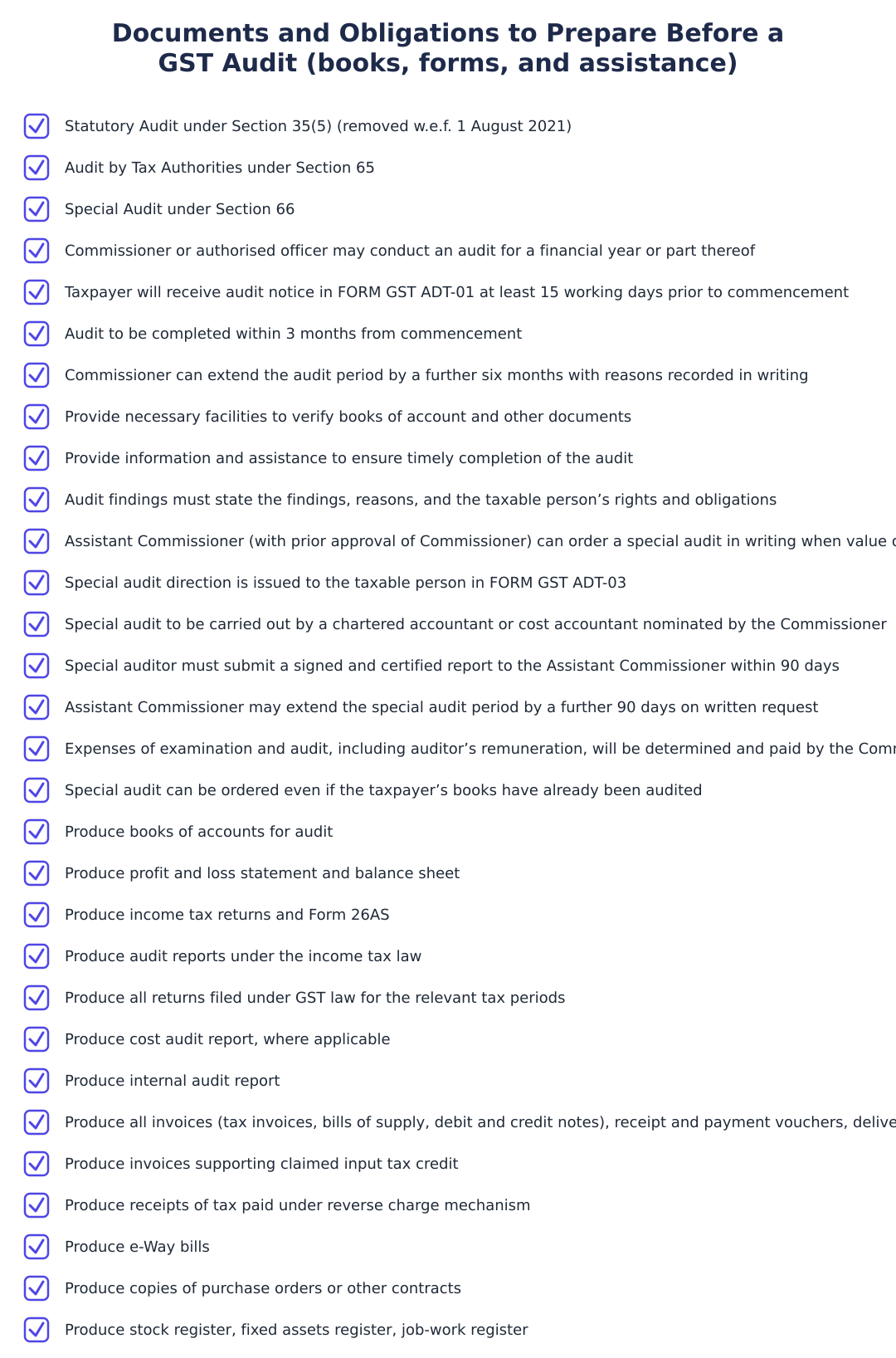
You must provide necessary facilities to inspect books of account and other documents, and give information and assistance to ensure timely completion of the audit. Typical documents an auditee should produce include books of accounts, profit & loss statement, balance sheet, GST returns, invoices (tax invoices, credit/debit notes), e-way bills, tax payment receipts under reverse charge, contracts and registers like stock and fixed assets. Failure to cooperate or withholding documents can lead to adverse findings, penalties, or invocation of special audit provisions if irregularities are suspected. Keep originals or certified copies and ensure records cover the audit period requested by the officer.
When will a special audit under Section 66 be ordered and who conducts it?
A special audit under Section 66 will be ordered by the Assistant Commissioner (with prior approval of the Commissioner) when they believe during scrutiny/inquiry/investigation that value has not been correctly declared or input tax credit has been wrongly availed. The officer issues FORM GST ADT-03 directing the taxable person to get a special audit done by a chartered accountant or cost accountant nominated by the Commissioner. The nominated auditor must submit a signed and certified report within 90 days (extendable by another 90 days), and the Commissioner will determine and pay the expenses including the auditor’s remuneration. A special audit can be ordered even if the taxpayer’s books were previously audited.
What does an audit report from tax authorities typically include and what are the consequences?
An audit report prepared by the tax authority will set out the findings, reasons for those findings, and the taxable person’s rights and obligations. Findings can include assessed additional tax liability, disallowance of input tax credit, or confirmation of compliance; the report will explain factual and legal bases and next steps like notices for demand, recovery, or appeal rights. Based on the report, the department may issue show-cause notices, levy penalties or demand payment of taxes, but the auditee retains the right to reply, provide evidence, and pursue remedies such as appeal or revision within statutory timelines. Maintain clear records and consult a tax professional promptly if the audit report contains adverse findings.
What documents should I keep ready for a GST audit to avoid delays?
You should keep books of accounts, profit & loss and balance sheet, GST returns for the relevant periods, invoices (sales and purchase tax invoices, credit/debit notes), e-way bills, receipts of tax paid under reverse charge, contracts/purchase orders, stock and fixed asset registers, income-tax audit reports and Form 26AS where applicable, and any internal or cost audit reports. Also have audit reports under the income tax law, invoices supporting input tax credit claims and other supporting vouchers ready because auditors will verify claimed credits and declared turnover. Providing complete, organized records speeds up the audit, reduces queries, and lowers the risk of adverse findings; retain records for the statutory period as required under GST law.
Who pays for the special audit and can the special auditor extend the audit period?
The Commissioner determines the expenses of the special audit, including the auditor’s remuneration, and those expenses are to be paid by the Commissioner. The nominated chartered accountant or cost accountant must submit the special audit report within 90 days, and this period may be extended by the Assistant Commissioner by another 90 days if requested in writing by the taxpayer or the auditor. Although the Commissioner bears the cost, taxpayers must still provide full cooperation and necessary documents; delays or non-cooperation can affect timelines and may lead to additional actions by the tax authorities.
Need help staying GST compliant?
MoneyGence's AI Finance OS tracks your compliance, wallet share, and finances in one place, built for agencies and growing businesses.
Get started with MoneyGence