GST Scrutiny Notice: Forms, Timeline & How to Respond
This guide explains, in plain language, what a GST scrutiny notice is, why revenue authorities issue them, how taxpayers should approach a notice, and the typical steps that follow once a reply is submitted. You’ll learn how to assess the nature of the enquiry, prepare a focused response, and the practical considerations that help reduce friction with tax officials. The aim is to make the process less daunting: many businesses and taxpayers face scrutiny at some point, and a clear, methodical response can shorten the interaction and limit escalation. This article does not replace professional advice but equips you with a framework to understand the objectives behind scrutiny, how to organise documents and evidence, the options available when you agree or disagree with the observations, and the possible outcomes if you do not respond. Whether you are a small business owner, a finance professional, or an individual taxpayer, knowing how scrutiny notices function will help you preserve records, communicate effectively with authorities, and make informed decisions about contesting or complying with findings. Read on for structured guidance on what to expect and how to act when a scrutiny notice arrives.
What is a Scrutiny Assessment under GST?
A scrutiny assessment is an administrative review initiated by tax authorities to verify the correctness of a taxpayer’s returns and declarations. It is typically narrower than a full audit: the objective is to clarify discrepancies, seek further information, or confirm that declared figures are supported by records.
From a taxpayer’s perspective, a scrutiny notice signals that the assessing officer has identified one or more items that need explanation. The notice will usually indicate the period under scrutiny and ask for supporting evidence or clarification. It is important to read the notice carefully to understand what the officer is asking for and to prepare a targeted reply rather than an indiscriminate submission of all documents.
Objectives of the Scrutiny Assessment
The primary objective of scrutiny is to ensure that tax liabilities, input tax credits and other return details are accurately reported. Authorities use scrutiny to check specific transactions, reconcile returns, and validate that the tax positions claimed are backed by evidence.
Scrutiny also serves to detect inadvertent errors or omissions so they can be corrected early. For taxpayers, responding promptly and with clear documentation often resolves issues without the need for more intrusive actions. Conversely, failure to clarify discrepancies can lead to more extensive inquiries or enforcement measures.
Automated Return Scrutiny Module
Many tax administrations use automated tools to compare filed returns with available data sources and flag anomalies. These systems can trigger scrutiny notices when they detect mismatches, large variances, or missing information relative to what the system expects.
Automation helps authorities focus limited compliance resources on higher-risk cases, while also giving taxpayers the opportunity to explain or rectify discrepancies quickly. When a notice arises from an automated check, the communication will generally reference the specific mismatch or data point that needs clarification.
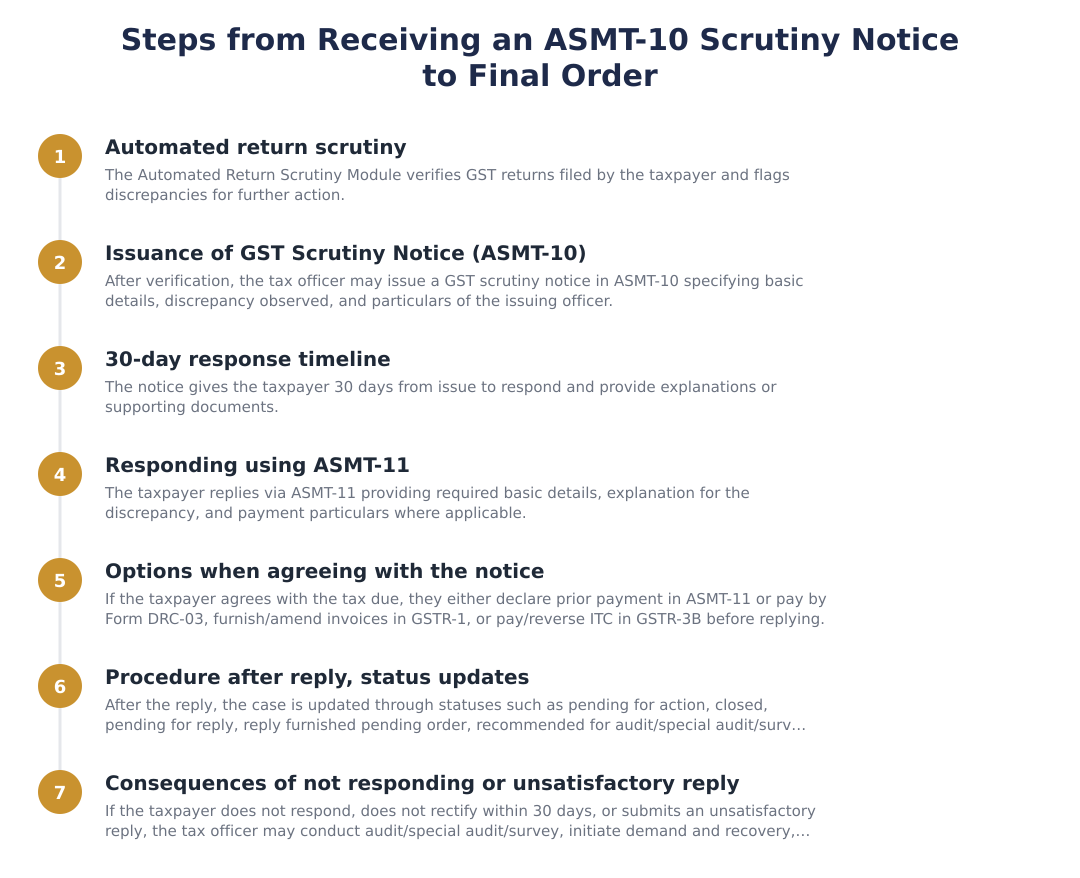
GST Scrutiny Notice in ASMT-10: Forms, Timelines, Mode, and Contents
A scrutiny notice typically sets out the basic identification details (such as taxpayer identity and the tax period in question), describes the observed discrepancy or point of query, and specifies how the taxpayer should respond. It will also identify the issuing officer and include a reference or tracking number to facilitate follow-up.
The notice may be issued electronically through the tax portal or delivered through other prescribed channels. It often outlines a response window and the mode in which the reply should be submitted, and it may attach a list of required documents. Carefully checking these procedural instructions ensures your reply is accepted and properly recorded.
How to respond to a Scrutiny Notice using ASMT-11?
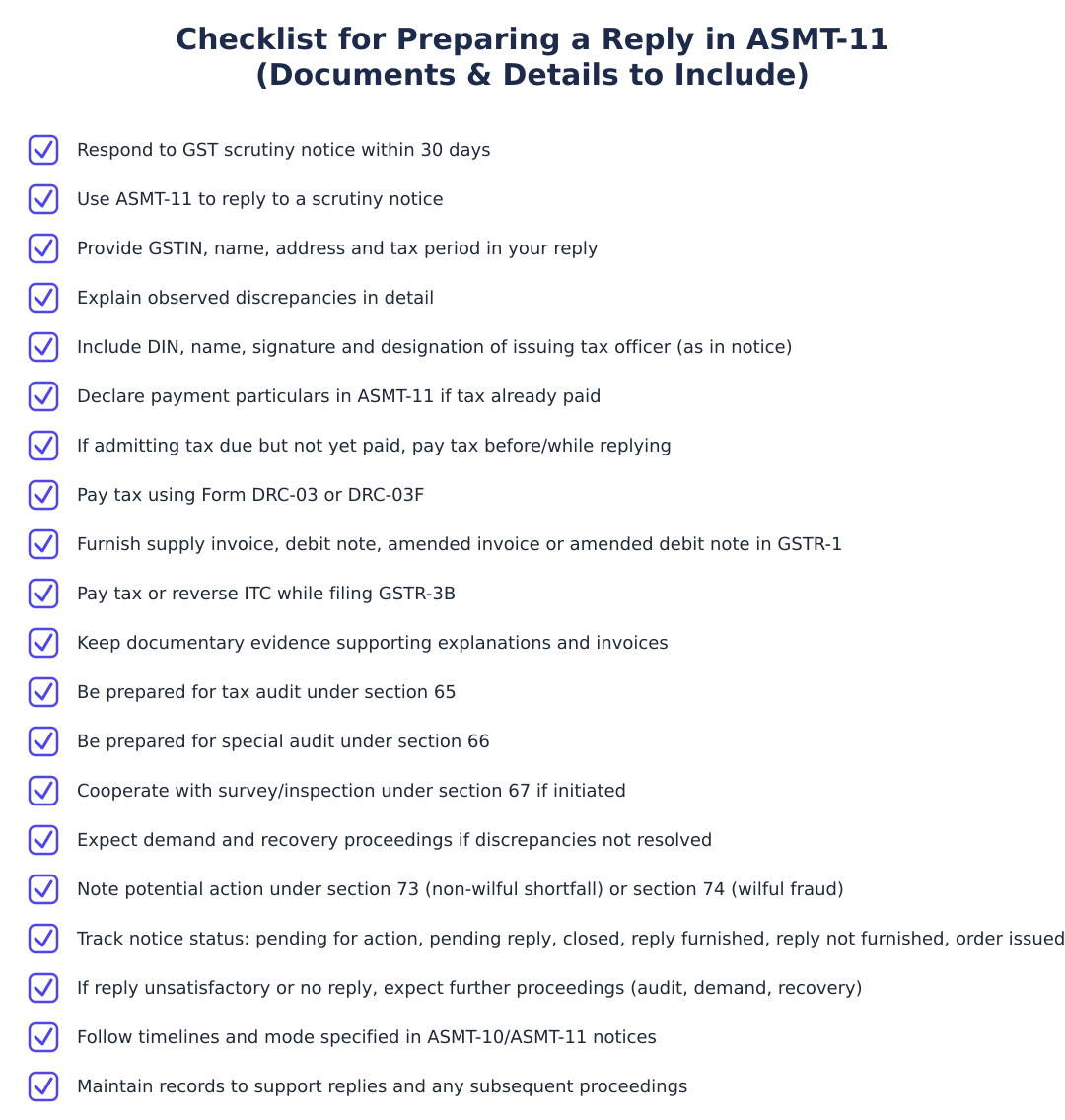
When preparing a reply, stay factual and concise: address each point raised in the notice in sequence, reference supporting documents, and include any computation or reconciliation that clarifies the matter. Where possible, cite invoices, ledger extracts, bank statements or other primary records that substantiate the figures in your return.
If you agree with the finding, explain how you will regularise the position and include evidence of payment or proposed timelines for compliance, where applicable. If you disagree, provide clear legal or factual reasoning and attach documents that support your position. Maintain a record of the submitted reply and any acknowledgement from the tax portal or officer.
Procedure after replying to a Scrutiny Notice
After a reply is submitted, the matter is generally marked for the assessing officer’s review. The officer may accept the explanation, seek additional information, or proceed to issue an order based on the materials on record. The file’s status usually reflects these stages so that both the taxpayer and the officer can track progress.
If the officer requires further clarification, there may be opportunities for additional submissions or, in some systems, an interactive session with the officer. It is good practice to monitor the case status and respond quickly to any follow-up requests to avoid escalation.
Consequences of not responding to a Scrutiny Notice
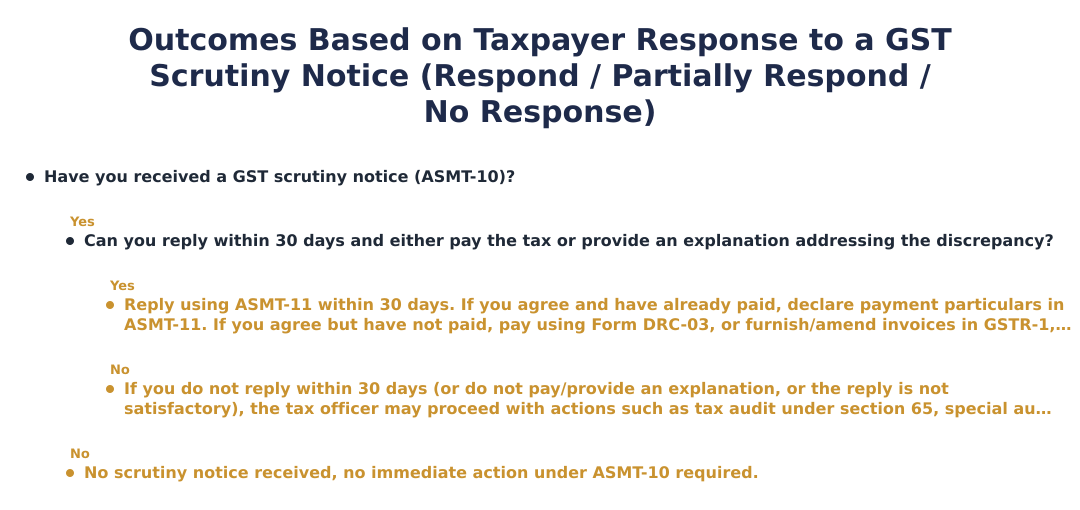
Ignoring a scrutiny notice can lead to adverse consequences. Where the taxpayer does not respond or does not provide satisfactory clarification, authorities may escalate matters which could include audits, demand notices, or other compliance actions permitted under the law.
Timely engagement generally reduces the risk of escalation. If a taxpayer is unsure how to respond, seeking professional advice early can help present a reasoned reply and explore options such as rectification, payment, or legal contestation where appropriate.
A scrutiny notice is an opportunity to clarify return details and correct mistakes before a matter becomes more serious. Responding promptly with organised evidence and clear explanations often resolves issues efficiently. If you face complexity or disagree with the observations, consider professional assistance to ensure your rights are protected and procedural requirements are met.
Frequently asked questions
What is a GST scrutiny notice and when is it issued?
A GST scrutiny notice is a formal communication issued by the tax officer after verification of the returns filed by a taxpayer asking for explanation or clarification of discrepancies. It is issued when the Automated Return Scrutiny Module or manual review detects mismatches in returns, anomalies in tax/ITC claims, non-filing or inconsistent data for a particular tax period, and it is sent electronically in form ASMT-10 giving the taxpayer an opportunity to explain within the stipulated timeline. The notice will contain basic details like GSTIN, tax period, the discrepancy observed and particulars of the officer (DIN, name, designation) and does not provide for a personal hearing at this stage. If the taxpayer replies satisfactorily, proceedings may be dropped; if not, further action under audit, special audit, survey or demand may follow.
What is ASMT-10 and what information does it contain?
ASMT-10 is the electronic scrutiny notice issued by the tax officer to inform a taxpayer about discrepancies found during return verification and to seek an explanation. It contains the taxpayer’s basic details (GSTIN, name, address, tax period), the details of the discrepancy observed (with specifics and amounts if any), and particulars of the tax officer issuing the notice including DIN, name, designation and signature. The form also specifies the time allowed to reply (usually 30 days) and the mode to reply (electronically through the GST portal using ASMT-11). ASMT-10 is the starting document of scrutiny assessment and frames the issues to be replied to by the taxpayer.
How long do I have to reply to a GST scrutiny notice and how is the time computed?
You have 30 days from the date of issue of the scrutiny notice (ASMT-10) to submit your reply to the tax officer. The 30-day timeline is counted from the date the notice is issued on the GST portal and the reply must be filed electronically using form ASMT-11 unless the notice prescribes otherwise. If you need more time, you should request an extension promptly through the portal or explain reasons in the reply; failure to reply within 30 days can lead to further action such as audit, demand or recovery. Always keep proof of payment or filings (DRC-03, GSTR-1/GSTR-3B amendments) handy if you have already rectified the discrepancy.
How do I reply to a scrutiny notice using ASMT-11 on the GST portal?
You reply to a scrutiny notice by filing form ASMT-11 electronically on the GST portal and attaching your explanation and supporting documents. In ASMT-11 you should either admit and declare payment particulars if you have already paid the tax due, or explain the reasons and indicate how you will rectify, for example, pay tax via Form DRC-03, furnish amended invoices/debit notes in GSTR-1, or reverse ITC/pay tax in GSTR-3B, and attach documentary evidence. The portal workflow requires you to select the case, click 'Replies', choose 'Notice', upload attachments and submit; once submitted the case status updates (e.g., 'Reply furnished; pending for order by the tax officer'). Be factual, include transaction-level evidence for discrepancies and retain submission receipts for future reference.
What happens after I submit my reply to a GST scrutiny notice?
After you submit your reply in ASMT-11, the tax officer reviews it and either drops the proceedings if satisfied or initiates further action if not satisfied. The case status on the portal can change to outcomes such as 'Closed', 'Reply furnished; pending for order by the tax officer', or recommendations for action under sections 65 (audit), 66 (special audit), 67 (survey/inspection), 73/74 (demand for tax with/without fraud), or recovery. If the officer requires more clarification, you may receive follow-up notices; if the officer accepts your reply, an order of acceptance (ASMT-12) is issued and no further action follows for that issue. Keep records of the reply, payment proofs and supporting invoices because they will be required if the matter proceeds to audit or demand.
What are the consequences if I do not reply to a GST scrutiny notice?
If you do not reply to a GST scrutiny notice within the prescribed 30 days or provide an unsatisfactory reply, the tax officer may take further enforcement actions including audit under section 65, special audit under section 66, survey/inspection under section 67, or initiate demand and recovery proceedings under sections 73/74. Non-response or failure to pay the tax leads to issuance of notices for outstanding demand, possible penalty, seizure or prosecution in extreme cases where fraud or wilful evasion is suspected. Therefore, not replying can escalate the matter quickly and reduce options to mitigate liability; it is better to respond, admit and pay if liability is clear, or provide documentary justification promptly.
What options do I have if I agree with the tax liability raised in the scrutiny notice?
If you agree with the tax liability raised in the scrutiny notice, you should declare payment particulars in ASMT-11 if already paid, or pay the tax and then reply in ASMT-11 with proof of payment. Payment options include filing Form DRC-03 to pay the demand, furnishing corrected supply invoices/debit notes or amended documents in GSTR-1, or paying tax/reversing ITC while filing GSTR-3B for the relevant period. After payment and submission of the reply with supporting documents, the tax officer may accept the reply and issue an order dropping further proceedings, provided the explanation and evidence are satisfactory.
How does the Automated Return Scrutiny Module work and what triggers it?
The Automated Return Scrutiny Module (ARSM) is an IT-based system that compares data across returns, invoices and other sources to flag inconsistencies and generate risk-based notices like ASMT-10. It triggers notices when there are mismatches in outward supplies, inward supplies, ITC claims, non-filing, or anomalies in tax payment patterns for specific tax periods, based on pre-defined risk parameters and rules. Once a discrepancy is flagged, the module creates a case and the tax officer issues a scrutiny notice electronically; taxpayers can view case details and reply online through the portal. ARSM helps streamline detection but does not itself levy demand, the officer must review replies and take final action.
Can a scrutiny notice lead to an audit, special audit or recovery proceedings?
Yes, a scrutiny notice can lead to an audit, special audit, survey/inspection or recovery proceedings if the taxpayer fails to respond satisfactorily or there is evidence of significant discrepancy or fraud. The officer may recommend action under section 65 (tax audit), section 66 (special audit), section 67 (survey/inspection), or initiate demand and recovery under sections 73 (non-fraud cases) or 74 (fraudulent/wilful evasion) depending on the facts. The portal case status may reflect recommendations for these actions and you will receive separate notices/orders for each action with their own procedures and timelines. Responding properly to the original scrutiny notice with documentary proof often prevents escalation to these more intrusive actions.
Need help staying GST compliant?
MoneyGence's AI Finance OS tracks your compliance, wallet share, and finances in one place, built for agencies and growing businesses.
Get started with MoneyGence