Payroll Management: Payroll Software, Benefits & Best Practices
Payroll management is the administrative backbone that ensures employees are paid correctly and on time while an organisation stays compliant with applicable laws. In this guide you will learn what payroll management means in practical terms, why maintaining accurate payroll records matters to employers and employees alike, and how thoughtful payroll practices or software choices can support compliance, employee morale and operational efficiency. Payroll goes beyond calculating salaries, it encompasses record-keeping for incentives, deductions and other employment-related payments, and creates a reliable audit trail that employers are legally required to maintain. Understanding these core responsibilities helps business owners, HR leaders and finance teams reduce risk, avoid legal consequences and build trust with staff. This guide explains the concept of payroll management, explores how effective payroll processes affect the workforce, outlines practical considerations for choosing payroll software, and highlights essential capabilities to look for in a system. Whether you are setting up payroll for a small business, reviewing an existing process, or evaluating software options, the practical insights here will help you align payroll administration with statutory obligations and organisational goals.
What is Payroll Management?
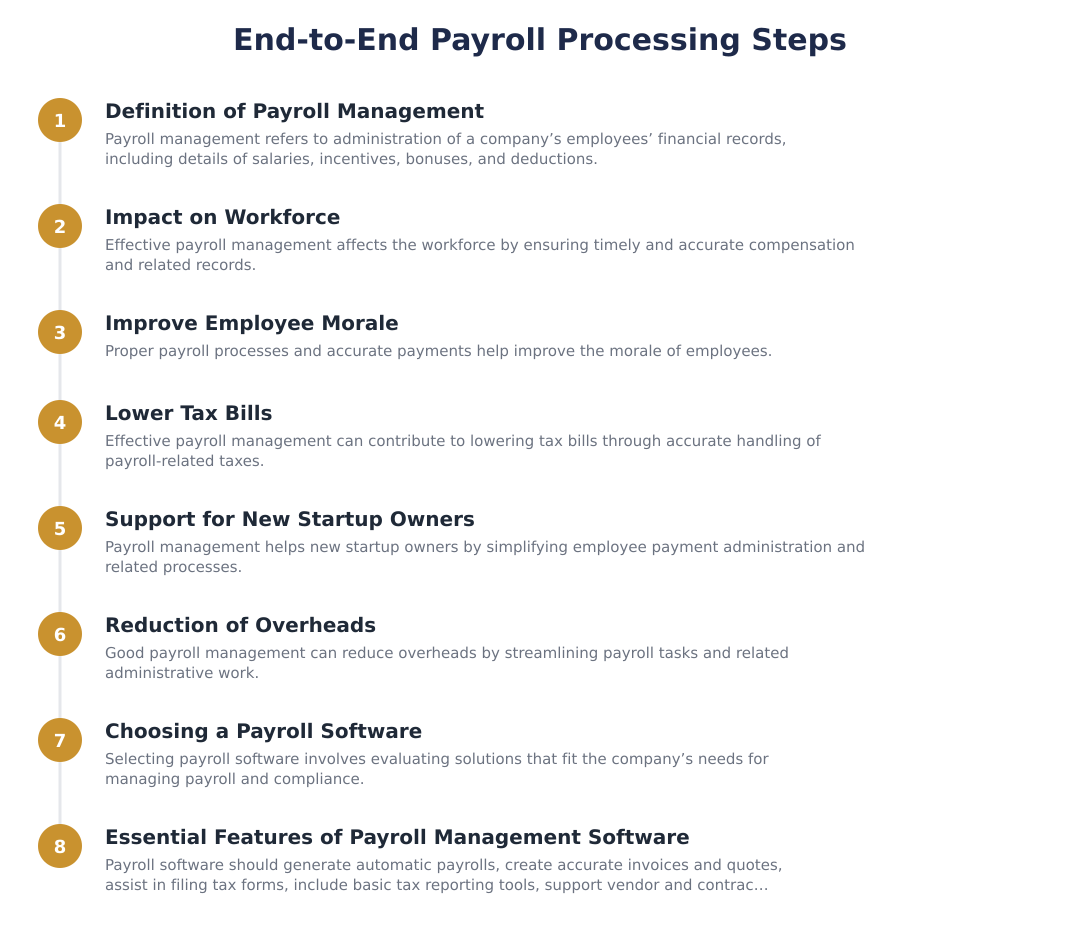
Payroll management refers to the administration of a company’s employees’ financial records, including details of salaries, incentives, bonuses and deductions. It is the systematic handling of all payments due to staff and the associated records that document those transactions.
This function typically sits at the intersection of HR and finance: it requires accurate inputs about attendance, salaries and benefits, and produces outputs such as pay slips, accounting entries and records that may be required for statutory reporting or audits.
Employer legal obligations and consequences of non-compliance
Employers must maintain and keep employee financial records as dictated by law. Proper record-keeping is not optional, it is a statutory responsibility that supports transparency around compensation, deductions and other employment-related payments.
Not complying with the Income Tax laws pertaining to employee records can be grounds for legal consequences. That makes accurate payroll documentation both a risk-management practice and a compliance requirement: incomplete or inaccurate records can expose an organisation to penalties, disputes or enforcement actions.
How does effective payroll management affect your workforce?
Consistent, accurate payroll processes build trust between employees and the employer. When people receive correct pay and clear documentation for deductions and benefits, it reduces confusion and resentment and supports a positive employment relationship.
Beyond trust, effective payroll helps in dispute resolution and employee satisfaction. Well-maintained records mean faster responses to queries about pay, easier correction of mistakes and a clearer basis for managing bonuses, incentives and adjustments.
Choosing payroll software
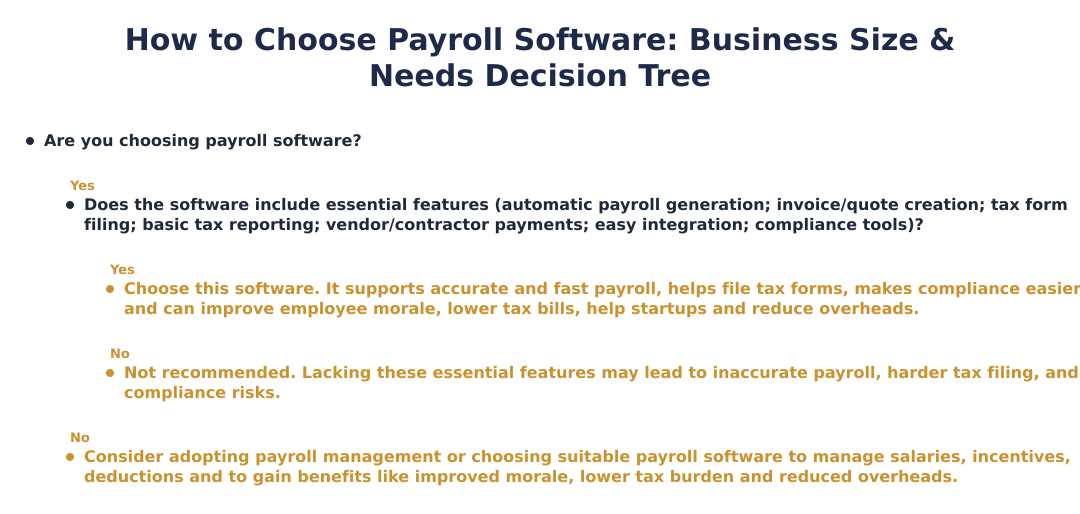
Selecting payroll software is a practical way to bring consistency and accuracy to payroll administration. A good system should help automate routine calculations, centralise employee financial records and produce clear outputs that can be used for internal accounting and statutory record-keeping.
When evaluating options, consider how a product will integrate with your existing HR and accounting workflows, how it supports secure storage and retrieval of payroll records, and whether it can scale with your organisation’s headcount and changing pay structures. The aim is to reduce manual effort while strengthening your ability to maintain the records the law requires.
Essential features of payroll management software
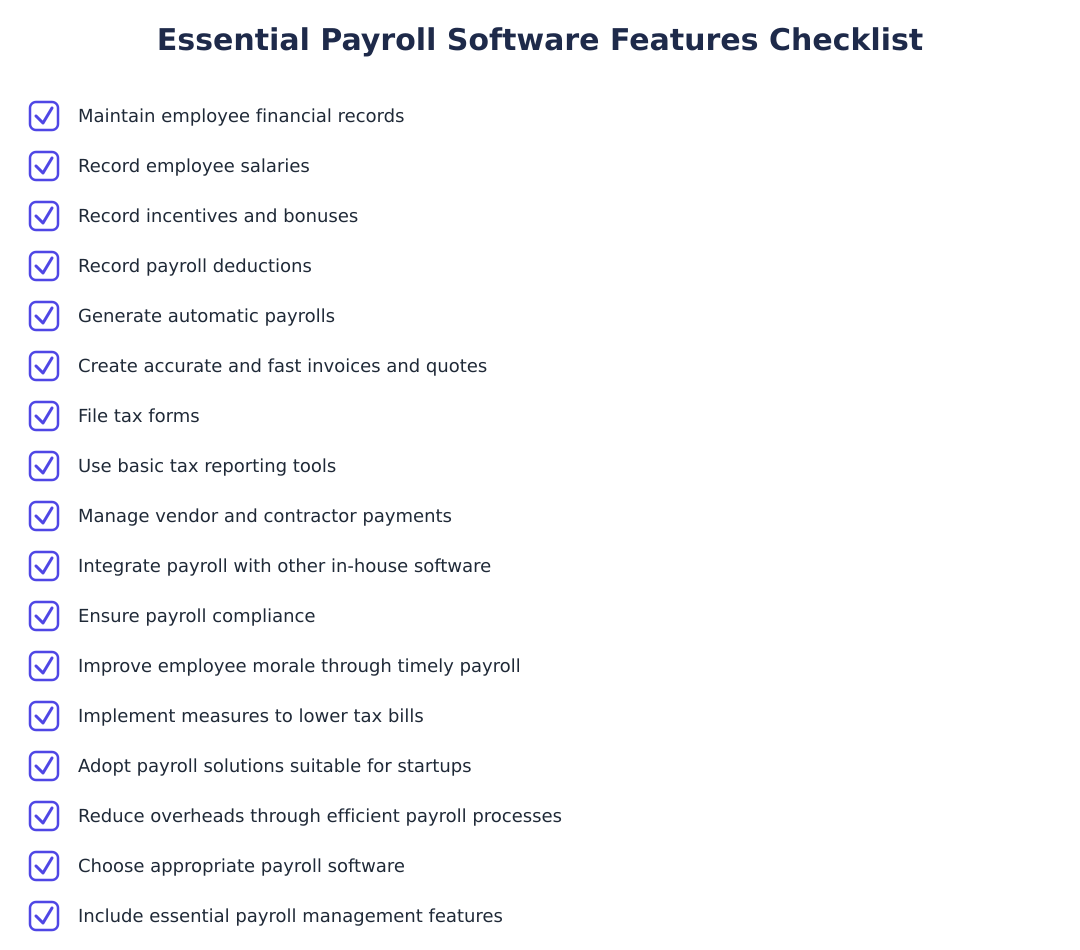
Core capabilities to look for include reliable calculation engines, robust record-keeping and reporting tools, and easy generation of employee pay documentation. These features help ensure that salaries, incentives and deductions are captured accurately and that a traceable record exists for each payroll cycle.
Security and access controls are also important so that sensitive payroll information is protected and only available to authorised personnel. Finally, choose solutions that simplify auditing and retrieval of historical records so you can meet legal obligations and respond quickly to any compliance enquiries.
Sound payroll management is both an operational necessity and a legal responsibility. By understanding what payroll administration entails, keeping accurate records and choosing systems that support compliant processes, employers can protect the business from legal risk while improving employee confidence and organisational efficiency.
Frequently asked questions
What is payroll management?
Payroll management is the administration of an employer’s employee financial records including salaries, incentives, bonuses, deductions and net pay. It involves calculating gross pay, withholding taxes and statutory contributions, issuing payslips, and maintaining records for compliance with labour and tax laws. Proper payroll management ensures timely and accurate payments, helps avoid legal penalties for non-compliance, and provides documentation for audits and employee disputes. Employers must keep these records as required by applicable laws to prevent legal consequences.
How does effective payroll management affect employee morale?
Effective payroll management improves employee morale by ensuring timely, accurate and transparent salary payments and deductions. When employees receive correct pay on time and can access clear payslips, trust in the employer increases, grievances decrease, and overall job satisfaction rises. Consistent payroll processes also support retention and make performance-related incentives easier to administer, which further motivates staff.
Can good payroll management lower a company's tax bills?
Yes, good payroll management can help lower a company’s tax bills by ensuring correct tax withholdings, taking advantage of allowable deductions and avoiding penalties and interest from non-compliance. Accurate payroll reporting enables timely filing of tax forms and statutory returns, which prevents costly late fees and assessments. Additionally, software that contains basic tax reporting tools can automate calculations for income tax, provident fund and other statutory contributions, reducing manual errors that could increase tax liabilities.
How does payroll management help new startup owners?
Payroll management helps new startup owners by simplifying salary calculations, statutory compliance and record-keeping so founders can focus on core business activities. For startups with limited HR resources, payroll systems automate payslips, tax filings and contractor/vendor payments, reducing administrative burden and the risk of non-compliance. This allows small teams to scale without hiring a large back-office staff and helps present professional, timely compensation to employees and vendors.
How can payroll management reduce overhead costs?
Payroll management can reduce overhead costs by automating repetitive tasks, minimizing manual errors and reducing the need for large administrative teams. Automation speeds up payroll runs, invoice generation and tax filings, which cuts processing time and associated labour costs. Integrations with accounting and HR systems further reduce duplicate data entry and the chance of costly compliance mistakes that result in fines.
What features should I look for when choosing payroll software?
When choosing payroll software you should look for automatic payroll generation, accurate invoice and quotation tools, tax form filing assistance, basic tax reporting, vendor and contractor payment capabilities, easy integration with in-house systems, and compliance tools. The software should handle statutory calculations, produce payslips, support multiple pay cycles, and provide secure employee data management. Also prioritize user-friendly interfaces and reliable customer support to ensure smooth adoption and fewer payroll errors.
What are the essential features of payroll management software?
Essential features of payroll management software include automatic payroll generation, accurate invoice and quote creation, tax form filing assistance, basic tax reporting tools, vendor and contractor payment modules, easy integration with other in-house software, and compliance management. The software should also support payslip distribution, multiple pay frequencies, statutory deductions (like taxes and provident fund), audit trails, and secure storage of employee financial records. These features reduce manual effort, improve accuracy and help ensure statutory compliance.
How important is integration when selecting payroll software?
Integration is crucial because payroll software that connects with HR, attendance, accounting and banking systems reduces duplicate data entry and payroll errors. Seamless integration enables automatic transfer of attendance and leave data into payroll calculations, direct vendor and salary payments, and synchronized accounting entries for easier reconciliation. Good integrations also speed up reporting and filing processes, improving compliance and lowering administrative overhead.
What should I do to avoid payroll errors and late payments?
To avoid payroll errors and late payments, standardize payroll processes, use reliable payroll software with automated calculations and compliance checks, and maintain up-to-date employee records including tax and bank details. Schedule payroll runs well before payment dates, reconcile payroll with attendance and accounting data, and review statutory filings and deductions for accuracy. Regular audits, user access controls and backups will further reduce mistakes and ensure timely salary disbursals.
Need help staying Payroll compliant?
MoneyGence's AI Finance OS tracks your compliance, wallet share, and finances in one place, built for agencies and growing businesses.
Get started with MoneyGence