Reasons to Receive Income Tax Notice: 7 Common Causes Explained
Receiving an income-tax notice can be stressful, but understanding why it arrived and what to do next makes the situation manageable. This guide explains the most common reasons the Income Tax Department issues notices, from simple omissions in your return to targeted enquiries, and walks you through practical first steps after you receive one. You will learn the typical triggers for notices (such as undeclared interest income, incorrect deductions, or high-value transactions), how the department may reopen older assessments, and the basic checks to verify that the notice is valid and addressed to you. The guidance emphasises what to look for on the notice itself, the assessment year, the issuing officer’s details and any document identification number, and clarifies two frequent scenarios: when you have not filed ITR but the department believes you have, and when you have filed ITR but the Assessing Officer requires more information. By the end of this article you will know the common reasons for notices, the immediate actions to take to protect your position, and the key facts to confirm before engaging with the department or a tax advisor. This helps avoid missed deadlines and ensures any response is focused and supported by the relevant documents.
Why did you Receive an Income Tax Notice?
Income-tax notices are issued for many reasons, some routine and some requiring closer attention. Often they flag a discrepancy between what the department’s records show and what you declared in your return. Other times notices arise from algorithmic triggers or targeted checks on particular transactions. Understanding the nature of the trigger helps determine whether the issue is a simple omission that can be corrected or a matter that needs a more detailed response.
Not all notices are the same. Some are generated because the department’s data suggests undeclared income or incorrect claims; others are procedural enquiries where the Assessing Officer seeks further information to complete assessment. There are also instances where older assessments are reopened if the Assessing Officer finds genuine reason to do so, this is carried out under section 148 (reopening of assessment).
7 Common Reasons To Receive an Income Tax Notice
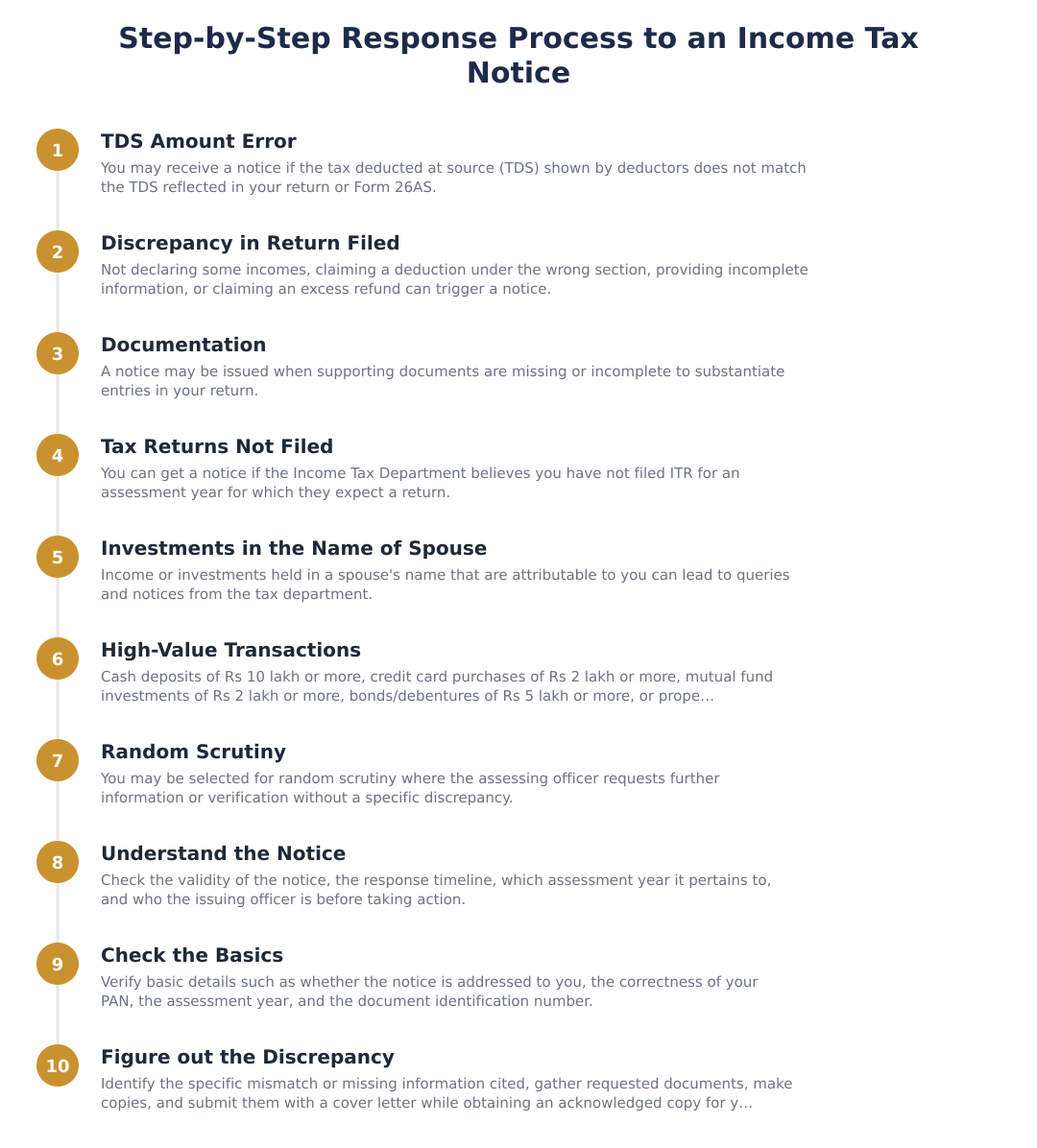
1. TDS Amount Error: Notices are commonly issued when the tax department’s records of tax deducted at source do not match the figures in your return. A mismatch can arise from reporting differences or omitted TDS entries.
2. Discrepancy in Return Filed: If you have forgotten to declare some income, for example, interest from fixed deposits, or if you have claimed a deduction under the wrong section, the department may issue a notice seeking clarification.
3. Documentation: Providing incomplete information in your return or to the department can prompt a notice. The Assessing Officer may request supporting documents to substantiate your reported incomes, deductions or exemptions.
4. Tax Returns Not Filed: Notices may be sent when you have not filed income-tax returns but the department’s systems indicate that you should have done so, or when they believe a return ought to have been filed.
5. Investments in the Name of Spouse: Investments or income credited in a spouse’s name can trigger enquiries if income, dividends or interest are not correctly attributed or disclosed in the tax return.
6. High-Value Transactions: Large or high-value transactions tend to attract scrutiny and are a common trigger for notices or enquiries from the tax department.
7. Random Scrutiny: Apart from data-driven triggers, some cases are selected for random scrutiny. A random scrutiny notice does not necessarily imply wrongdoing but does require a proper response.
Things to do after Receiving Income Tax Notice
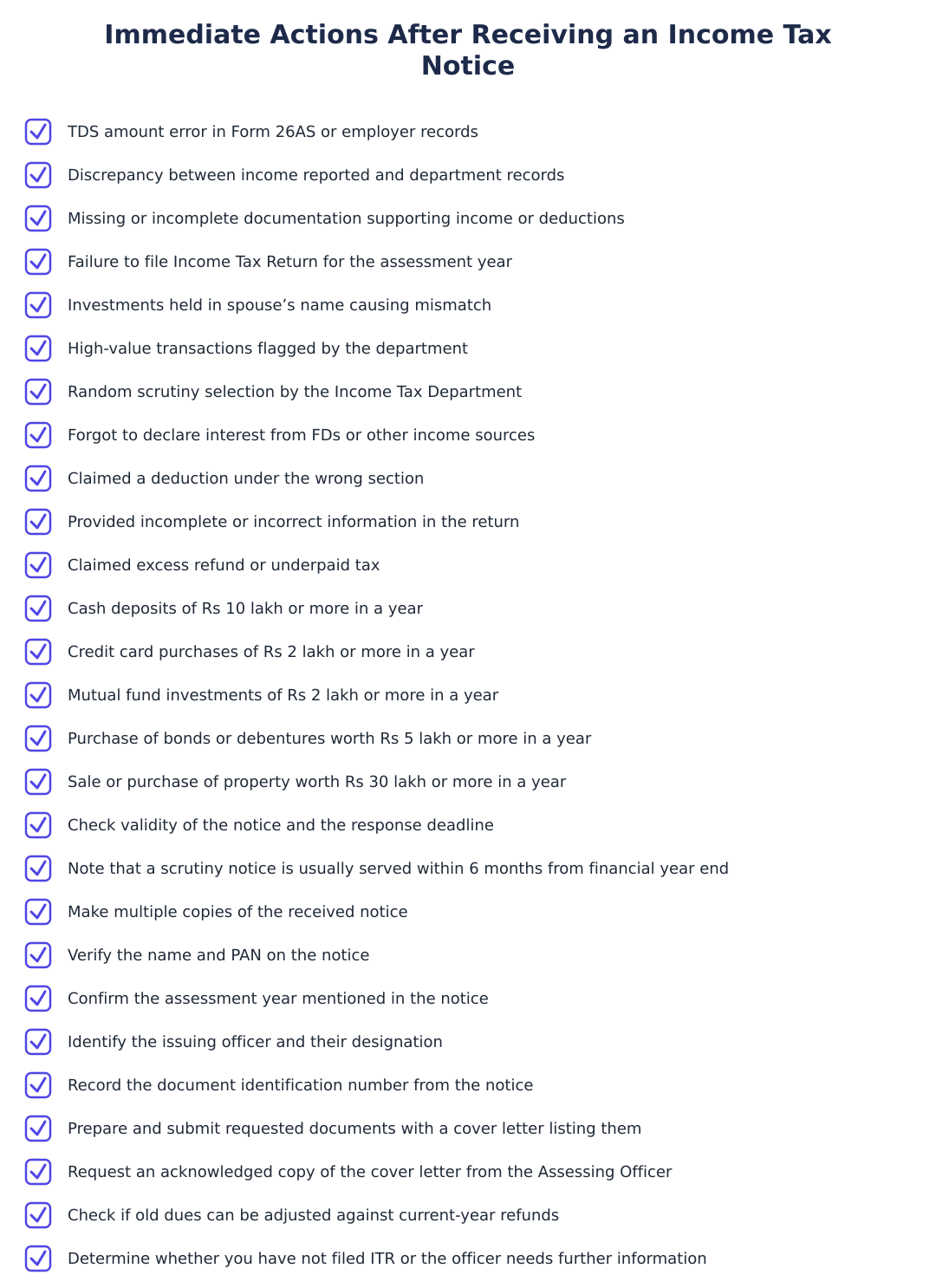
Read the notice carefully to identify the stated reason for the notice and whether it relates to a mismatch, missing information, or a reopening under section 148.
Verify that the notice is valid and correctly addressed: confirm your name, PAN, the assessment year mentioned, and the issuing officer’s designation and document identification number.
Compare the department’s figures with your records to pinpoint undeclared income, wrong deductions, or incomplete entries so you can prepare the relevant supporting documents.
If the notice requests more information because you filed ITR but the Assessing Officer requires further details, furnish the requested documents and explanations within the response window noted on the notice.
If the notice arises because you have not filed ITR but the department believes you should have, consider filing the return promptly and attaching an explanation to the Assessing Officer as needed.
Checklist: What to Verify on the Notice
Before taking any steps, confirm the basic identifiers on the notice. Check that your name and PAN are correctly mentioned; incorrect PAN or name are common administrative issues that must be corrected. The notice should also state which assessment year it pertains to, and must identify the issuing officer by designation along with a document identification number.
Also verify the notice’s validity and the duration given to respond to the Assessing Officer. Knowing exactly what the department is asking for and the timeline for reply lets you prioritise actions, whether that means gathering supporting documents for declared or undeclared income, or preparing an explanation for claimed deductions.
Frequently Asked Questions
Can older assessments be reopened? Yes, notices related to older cases can be sent under section 148 if the Assessing Officer finds genuine reason to reopen the assessment. This is the formal mechanism for reassessment of past years.
What if I didn’t file ITR but received a notice? One documented reason for notices is that the taxpayer has not filed ITR, but the Income Tax Department’s records indicate that a return ought to have been filed. In such cases, timely engagement and filing (if required) are key.
What if I filed ITR but still received a notice? Notices can also arise when the taxpayer has filed the ITR but the Assessing Officer requires further information to complete the assessment process. Responding with the requested documents and clear explanations usually resolves such queries.
An income-tax notice is often a request for clarification rather than an immediate accusation. By quickly verifying the notice details, matching the department’s data with your records, and responding with the right information within the time specified, most issues can be resolved. If matters are complex, for example, a reopening under section 148 or significant discrepancies, consult a tax professional to prepare a structured response.
Frequently asked questions
Why did I get an income tax notice for TDS mismatch?
You received a notice because the TDS reported by the deductor does not match the TDS claimed in your return or Form 26AS. This can happen if your employer or bank has deposited lower TDS, reported it against a wrong PAN, or if you forgot to include the TDS while filing ITR; check Form 26AS and TDS certificates to reconcile amounts. If the notice is correct, either request the deductor to revise TDS details or revise your ITR or file a rectification/response with evidence such as Form 16/16A. Respond within the period mentioned in the notice and keep copies of all communications and supporting documents for the Assessing Officer.
What does a notice for discrepancy in return filed mean?
A discrepancy notice means the income, deductions or tax details you filed in your return do not match the income department's records or third-party statements. Common causes are undeclared interest from FDs, claiming wrong deduction sections, or entering incorrect income figures; the notice will usually cite the specific mismatch and assessment year. To respond, verify your ITR against Form 26AS and other statements, provide documentary proof (bank interest certificates, investment proofs) or file a corrected/rectified return if necessary. Make sure to answer within the notice timeline and include a cover letter listing submitted documents to the Assessing Officer.
Why would I receive a notice about missing documentation?
You get a documentation notice when the assessing officer needs supporting proofs to verify claims made in your tax return, such as proof of investments, bills, or bank statements. The notice will specify which documents are required and the assessment year; common requests include investment proofs for tax deductions and evidence for claimed expenses. You should submit clear copies of the requested documents with a cover letter and ask for an acknowledged receipt; if you cannot produce something, explain the reason and provide alternate evidence where possible. Keep multiple copies of the submitted set and follow up if you do not receive an acknowledgement from the assessing officer.
Can I get an income tax notice for not filing returns?
Yes, the income tax department issues notices if you have not filed ITR but tax records or third-party information indicate taxable income. The notice may ask you to file the outstanding return or explain why you did not file, and sometimes propose tax computation based on available data. You should verify whether you were actually required to file for that assessment year, and if required, file the belated or revised return promptly and respond to the notice with evidence of filing. Delaying response can attract penalties or interest, so act within the period mentioned in the notice.
Why did I receive a notice for investments made in my spouse's name?
You may receive a notice when income or investments in your spouse's name are treated as your income for tax purposes, especially if the source of funds was yours or if clubbing provisions apply. The assessing officer may ask for proof of the source of funds, transfer agreements, or declaration showing the investments legitimately belong to the spouse to rebut clubbing. Provide documentary evidence such as bank statements showing source of funds, gift deed, or loan agreement and explain the relationship of funds; if clubbing rules legitimately apply, disclose the income and pay any tax due. Timely, clear documentation helps avoid reassessment or additional tax demand.
What kinds of high-value transactions trigger an income tax notice?
High-value transactions that commonly trigger notices include cash deposits of Rs 10 lakh or more in a year, credit card purchases of Rs 2 lakh or more, mutual fund investments of Rs 2 lakh or more, purchases of bonds/debentures worth Rs 5 lakh or more, and sale/purchase of property worth Rs 30 lakh or more. These thresholds are monitored through information returns submitted to the tax department and can prompt scrutiny or a questionnaire to confirm the source and tax treatment of the transaction. If you receive a notice, provide supporting documents like bank statements, sale deeds, PAN-linked transaction proofs, and explain the legitimate source of funds. Maintaining proper records and linking PAN to major transactions reduces the likelihood of disputes.
Why would I be selected for random scrutiny or assessment?
You can be selected for random scrutiny when the assessing officer decides to examine certain returns more closely, and this can be routine or based on specific risk parameters even without apparent discrepancy. Scrutiny notices typically arrive within six months from the end of the financial year but older cases can be reopened under Section 148 if there are genuine reasons. When selected, the officer will request documents and explanations to verify the return; you must submit the requested evidence, follow procedure, and keep copies of submissions. Random scrutiny does not always mean wrongdoing, it may simply be a detailed verification of claimed incomes and deductions.
What should I do first after receiving an income tax notice?
First, check the validity of the notice and the deadline to respond, and confirm that your name, PAN, assessment year and the issuing officer details are correct. Make multiple copies of the notice and read it carefully to understand the specific issue raised (TDS, discrepancy, missing documents, high-value transaction or non-filing). Then reconcile your return with Form 26AS and bank records to figure out the discrepancy, gather the requested documents, prepare a cover letter listing the documents, and submit them to the Assessing Officer while asking for an acknowledged receipt. If uncertain about legal implications or complex claims, consider consulting a tax professional promptly to avoid penalties or further action.
How do I check the basics of an income tax notice to avoid mistakes?
You should verify whether the notice is actually addressed to you by checking the name, PAN, assessment year, issuing officer and the document identification number printed on the notice. Also confirm the deadline to respond, the grounds cited for the notice, and whether it's a scrutiny or a simple information request; acting only after verification prevents responding to fraudulent or mistaken notices. Keep copies of all correspondence and, when responding, attach a concise cover letter listing included documents and request an acknowledged copy for your records. If any detail is incorrect (e.g., wrong PAN), notify the issuing authority immediately to correct the record.
Need help staying Income Tax compliant?
MoneyGence's AI Finance OS tracks your compliance, wallet share, and finances in one place, built for agencies and growing businesses.
Get started with MoneyGence