Section 11 Income Tax Act 2025 – Exempt Incomes Explained
This guide helps you understand how provisions that exempt certain incomes from tax typically work, why they matter for taxpayers and organisations, and how to approach compliance and documentation. You will learn what kinds of income are commonly treated as exempt in many tax systems, how exemptions are usually structured (including conditions and consequences if conditions are not met), and practical steps to follow when claiming an exemption. The material emphasises principles, such as the difference between broadly available exemptions and those conditional on eligibility, the role of administrative rules and notifications, and common compliance pitfalls, so you can apply these concepts when reviewing the law or consulting a tax professional. Knowing where exemptions exist and what they require is important because exemptions affect taxable income, tax planning, and reporting obligations. Even when an exemption reduces tax liability, it often comes with reporting, record-keeping and condition‑checking requirements. This guide explains the typical elements you should look for: the list of exempt receipts, eligibility criteria, conditional safeguards, consequences for non-compliance, and how regulations and notifications can change practical application. Where specifics matter for your situation, you should review the actual statute, schedules, or official guidance, or get tailored advice from a qualified tax advisor.
What is a statutory exemption for income?
Many tax systems contain statutory provisions that exclude specified receipts from taxable income. Such exemptions can be broad (available to all taxpayers) or targeted (available only to particular categories of persons or entities). The underlying public-policy choices vary: some exemptions are designed to avoid double taxation, others to encourage certain activities, support welfare objectives, or honour long‑standing social policy (for example, reliefs related to retirement savings or scholarships).
Understanding the legal text and any linked schedules or annexures is essential because exemptions are usually defined precisely, not every receipt that looks similar will qualify. Exemptions often come with conditions (such as the nature of the recipient, timing, or use of funds) and require appropriate documentation to substantiate the claim.
How conditional exemptions typically differ from unconditional ones
Unconditional exemptions apply without extra tests, if the receipt matches the statutory description, it is excluded from taxable income. By contrast, conditional exemptions require satisfaction of one or more tests: eligibility of the recipient, the purpose of the payment, the way the amount is invested or utilised, or adherence to specified reporting requirements. Conditionality safeguards the policy intent but increases compliance complexity.
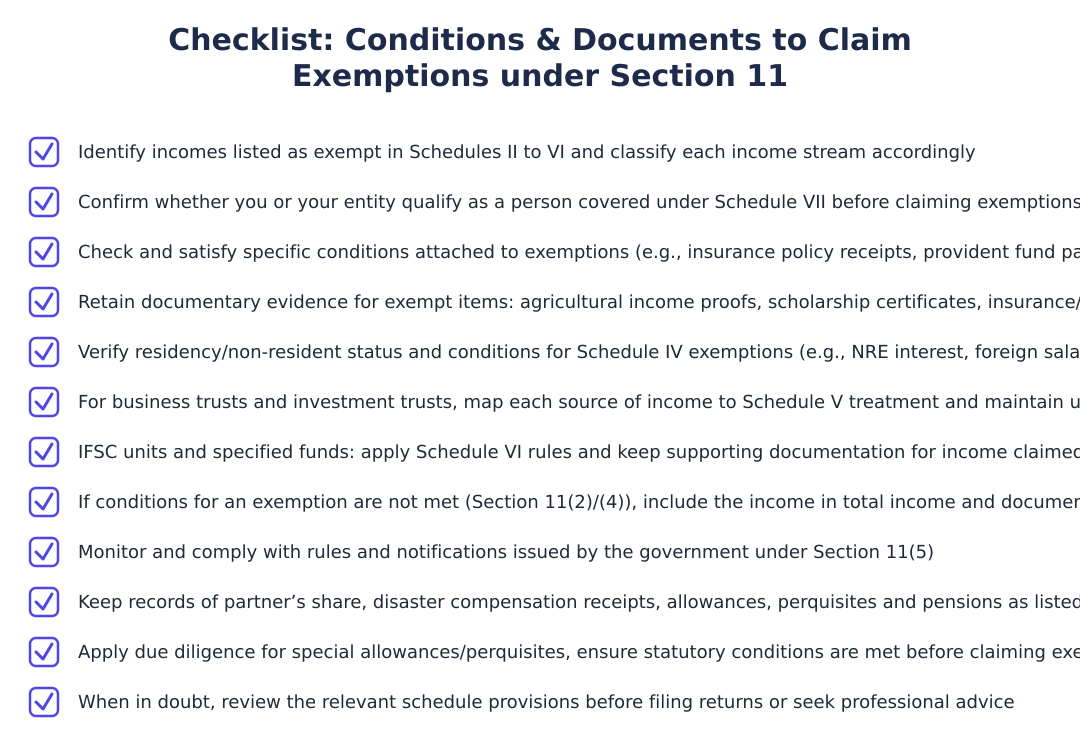
Practically, conditional exemptions mean taxpayers must maintain contemporaneous records, meet specified deadlines, and sometimes make periodic filings or certificates to demonstrate continuing eligibility. Failure to meet conditions often converts an otherwise exempt receipt into taxable income, and may also trigger interest or penalties under the applicable tax code.
Consequences when conditions for an exemption are not met
If statutory conditions are not satisfied, the most direct consequence is that the receipt will be includible in taxable income. This increases the tax liability for the period in which the condition failed. Additionally, administrative consequences can follow: the taxpayer may be required to reverse previously claimed exemptions, pay tax with interest, and face assessment queries.
Tax administrations also use rules and notifications to prescribe remedial steps or timelines for correcting non-compliance. In some systems, there are specific procedures for adjudicating disputes about whether conditions were satisfied; in others, settled practice and past rulings provide guidance on interpretation. Good record-keeping and seeking professional advice early can limit adverse outcomes.
Who typically benefits from special exemption schedules?
Statutes commonly include special schedules or annexures that list categories of persons or types of entities eligible for particular exemptions. These categories can include individuals, families, trusts, corporate entities, non-residents, investment vehicles, or entities operating in specific zones. Eligibility may depend on legal form, activities carried out, or residence status.
When reviewing whether an entity fits a schedule’s eligibility, focus on the statutory definitions and any cross‑references. Sometimes a single schedule contains a mixture of exemptions, some general, some narrowly tailored, so each listed exemption must be matched to the recipient and the facts at hand.
The role of rules, notifications and administrative powers
Legislation often delegates authority to the government or tax authority to issue rules, notifications, and clarifications that implement the exemption provisions. These instruments can set out procedural details, prescribe formats, fix timelines, or provide transitional arrangements. They are essential to translate a high‑level statutory exemption into operational practice.
Because rules and notifications can materially affect the scope or mechanics of an exemption, taxpayers should monitor official releases and circulars. In some cases, administrative guidance resolves ambiguities left by the statute and becomes central to compliance.
Exemptions for certain receipts are an important part of any tax code and can significantly affect tax outcomes. The key takeaways are: read the statutory language and any schedules carefully, confirm whether the exemption is conditional or unconditional, keep robust supporting records, and watch for rules or notifications that flesh out procedural requirements. For definitive answers about a specific provision or how it applies to your facts, consult the primary statute and official guidance or seek professional tax advice.
Frequently asked questions
What does Section 11 of the Income Tax Act 2025 do?
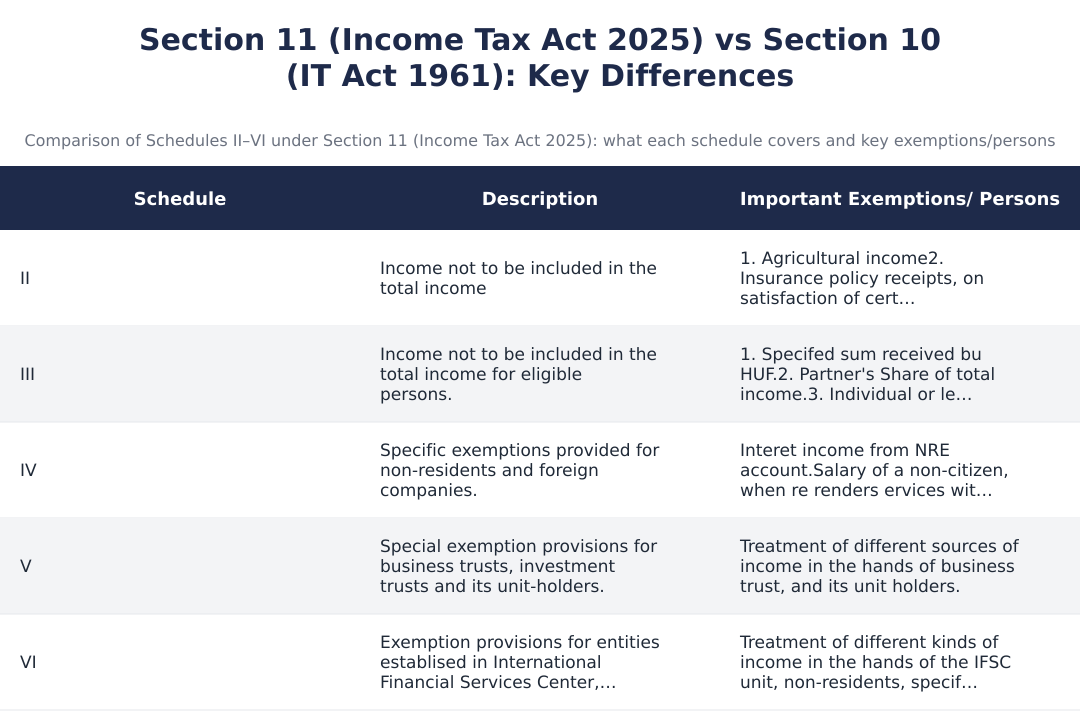
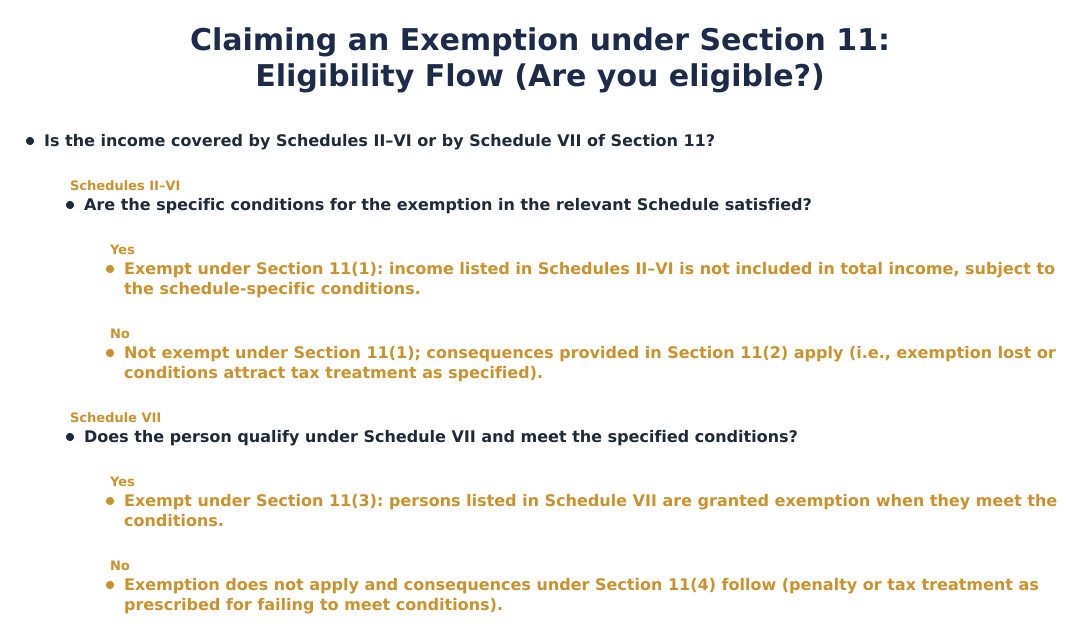
Section 11 of the Income Tax Act 2025 lists incomes that are exempt from being included in a taxpayer's total income. It classifies exempt incomes across Schedules II to VI and sets out who can claim those exemptions and under what conditions. The section is divided into five sub‑sections dealing with the list of exemptions, consequences of failing conditions, persons covered by Schedule VII, consequences for those persons, and the government's power to make rules. Examples of exempt items include agricultural income, certain insurance receipts, scholarships and specified provident fund/NPS payments when conditions are met.
Which incomes are covered under Schedule II of Section 11?
Schedule II covers specific incomes that are not to be included in total income, such as agricultural income, certain insurance policy receipts, specified provident fund payments, scholarships, and certain NPS payments when statutory conditions are satisfied. Each of these exemptions is conditional, for example, insurance proceeds and provident fund transfers are exempt only on meeting prescribed requirements. Agricultural income remains a classic exempt item but may have reporting or segregation requirements when assessing other taxes. The schedule therefore provides both the category of exempt income and the caveats for claiming that exemption.
What exemptions are given in Schedule III for eligible persons?
Schedule III lists incomes not included in total income for specific eligible persons, such as sums received by an HUF, a partner's share of profit, disaster compensation paid to an individual or legal heir, certain allowances and perquisites for specified employees, and pension or family pension in specified situations. Many of these exemptions are subject to conditions, for example, allowances or perquisites are exempt only if they meet the stated criteria in the schedule. The schedule clarifies who qualifies (like HUFs, partners, or specified employees) and when these receipts will remain outside total taxable income. This helps taxpayers and employers determine tax treatment for such receipts and ensure compliance.
What special exemptions apply to non‑residents and foreign companies under Schedule IV?
Schedule IV provides specific exemptions for non‑residents and foreign companies, such as certain interest income from NRE accounts and salary exemptions for non‑citizens rendering services in India under specified conditions. These exemptions are narrowly tailored and apply only when the precise conditions set out in the schedule are satisfied, for example residency tests or source-of-income rules. The schedule ensures cross-border taxpayers know which receipts may remain outside Indian taxable income and under what documentation or time‑limit conditions. Non‑resident taxpayers should verify the exact criteria before assuming exemption.
How does Schedule V treat business trusts and unit‑holders?
Schedule V provides special exemption and treatment rules for business trusts, investment trusts and their unit‑holders, specifying how different sources of income are taxed in the hands of the trust and the unit‑holders. It distinguishes income types (such as rental, interest, capital gains) and prescribes whether income is taxable at the trust level or flows through to unitholders. This schedule helps avoid double taxation and clarifies withholding and reporting obligations for trusts and investors. Unit‑holders should check the schedule to understand whether distributions are taxable in their hands or exempt.
What exemptions are available for entities in an International Financial Services Centre (IFSC) under Schedule VI?
Schedule VI contains exemption provisions for entities established in an IFSC and for certain non‑residents and specified funds and their unit‑holders deriving income from IFSC activities. It prescribes favourable treatment for different kinds of income earned by IFSC units, aiming to promote financial services within the IFSC. The schedule sets eligibility criteria and the exact nature of exemptions, so only qualifying entities and receipts enjoy the benefits. Entities intending to claim IFSC exemptions must meet the specified conditions and documentation requirements to avail these benefits.
What happens if you fail to meet conditions for an exemption under Section 11(2)?
If the conditions for claiming an exemption under Section 11(2) are not met, the income that was claimed as exempt will be includible in the taxpayer's total income and taxable accordingly. Section 11(2) specifies that non‑compliance with the prescribed conditions or failure to satisfy documentary or substantive requirements leads to loss of exemption and the income becomes taxable. There may also be consequences such as interest, penalties, or reassessment depending on the nature and severity of the breach. Taxpayers should carefully satisfy and document all conditions before claiming exemptions to avoid unexpected tax liabilities.
Who are the persons covered under Schedule VII and what if they fail conditions (Section 11(3) and 11(4))?
Schedule VII identifies specific persons who are eligible for exemptions under the section, and Section 11(3) grants those persons the specified tax relief subject to conditions; if they fail to meet those conditions Section 11(4) makes the exempt income taxable or imposes other consequences. In short, eligible entities listed in Schedule VII get exemptions only while they comply with the schedule's terms, and loss of compliance triggers taxation of previously exempt receipts or other penal consequences. The consequences may include inclusion of income in total income, denial of deductions, or application of rules prescribed by the government. Entities in Schedule VII must monitor compliance closely and maintain required records to retain their tax‑exempt status.
What powers does the government have under Section 11(5)?
Section 11(5) empowers the government to issue rules and notifications necessary to implement the exemption provisions and to clarify conditions, procedures and exceptions. This rule‑making power allows the government to specify forms, documentation, time limits, and transitional arrangements that taxpayers must follow to claim or maintain exemptions. Notifications may also provide clarifications, extend or restrict benefits, or set out compliance procedures for particular categories like IFSC units or trusts. Taxpayers should monitor official notifications and rules because they can materially affect eligibility and claiming processes for exemptions under Section 11.
Need help staying Income Tax compliant?
MoneyGence's AI Finance OS tracks your compliance, wallet share, and finances in one place, built for agencies and growing businesses.
Get started with MoneyGence