Section 143(1)(a) Notice: Guide to Responding & Deadlines
This guide explains how to read, assess and respond to an income‑tax notice that queries your filed return during assessment. You will learn how to identify what the notice is asking for, how to gather the right documents, how to draft a factual and measured reply, and when to involve a tax professional. Understanding these steps helps reduce anxiety, avoids inadvertent mistakes, and improves the chances of a quick and favourable resolution. The guidance focuses on practical, procedural actions and communication tips that apply across common notice types, so whether you run a small business, work as a salaried professional, or manage the accounts for a larger entity, you will find checklists and response techniques that make the process manageable. Responding to a tax notice promptly and on point is important because a well-structured response often prevents escalation. This guide will help you prioritise what to verify first on receiving a notice, how to organise supporting documents, and how to frame your reply so it addresses the authority’s queries directly. It also covers when to request clarifications, how to record an audit trail of communications, and practical steps to protect your position if the issue is complex. The advice emphasises clarity, evidence, and timeliness, three pillars that reduce the risk of adverse findings and keep compliance costs down.
First steps on receiving a notice
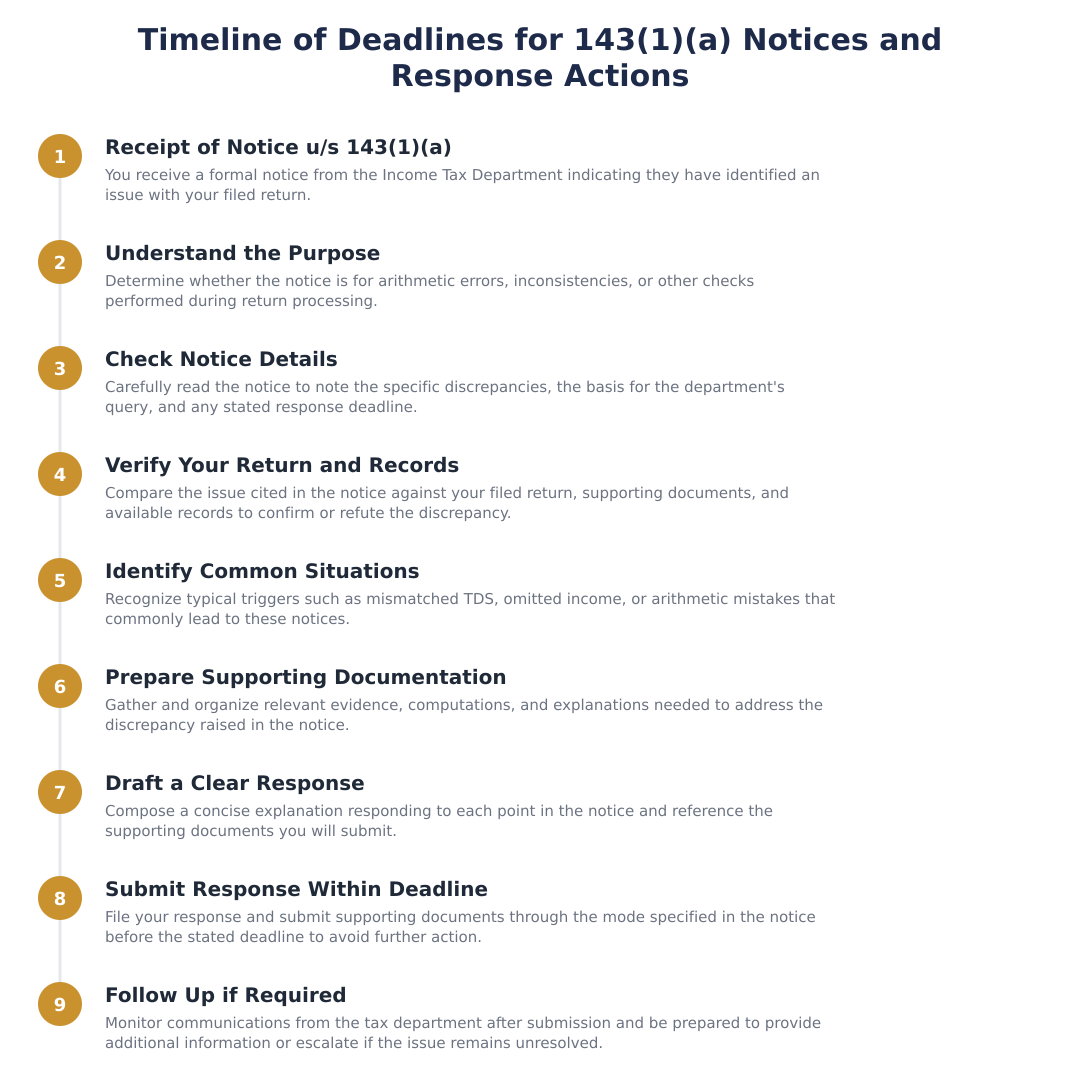
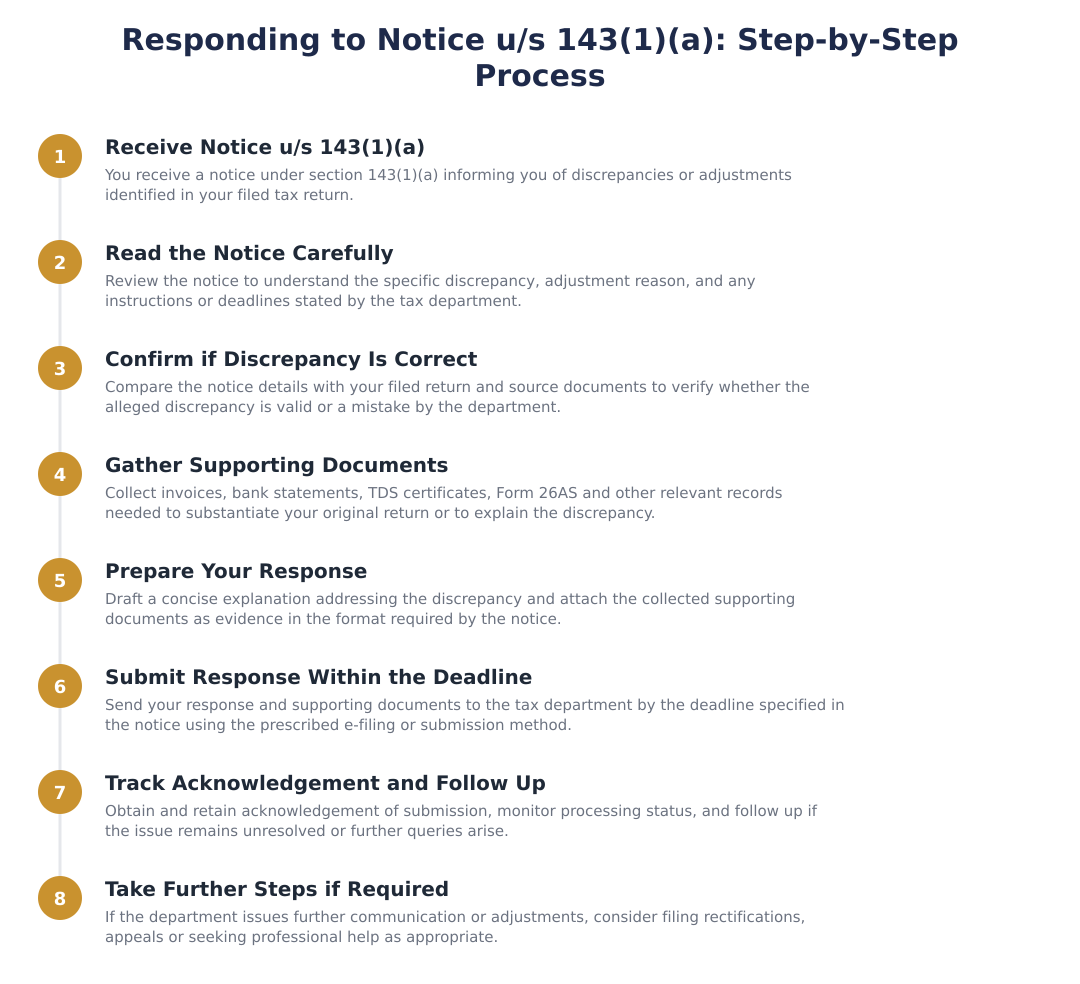
When you receive any communication from the tax department, read it carefully to determine the nature of the query. Identify whether it asks for supporting documents, an explanation of certain entries in your return, or additional information about specific transactions. Note any stated deadlines and the mode of response requested, electronic submission, a physical reply, or attendance at an office, so you can plan your next steps without missing timelines.
Next, verify the notice against your filed return and bookkeeping records. Cross‑check key figures and the transactions mentioned in the notice with your accounts and bank statements. This initial reconciliation helps you see whether the authority’s query arises from a simple mismatch (such as an omitted document or a timing difference) or reflects a more substantive issue that will need a detailed factual response or expert input.
Assembling supporting documents and evidence
Collect only the documents that are directly relevant to the points raised. Typical items include invoices, contract copies, bank statements, payment receipts, ledger entries and correspondence with counterparties. Where large volumes of records exist, prepare a concise index that points the reviewer to the exact pages or files that substantiate each claim in your reply.
When a transaction involves third parties, try to obtain corroborating evidence such as confirmations, delivery challans, or acknowledgements. If a document is unavailable, prepare a short note explaining why it cannot be produced and provide alternative supporting material. The aim is to create a clear and evidential trail that addresses the authority’s concerns rather than overwhelming them with unrelated paperwork.
Drafting a concise and factual response
Structure your reply so each paragraph or numbered point corresponds to a specific paragraph or query in the notice. Start with a brief factual background, then set out the documents you are enclosing, and finally explain how those documents address each query. Keep language neutral and factual, avoid argumentative or emotional phrasing, and focus on presenting evidence rather than opinions.
If you need more time to gather material or obtain third‑party confirmations, request an extension promptly and explain the reason. A professional, courteous extension request that sets a realistic deadline for submission helps preserve credibility and prevents unnecessary escalation.
When to involve a tax professional and how to work with them
Consider engaging a tax practitioner if the issues raised are complex, relate to interpretative questions, involve large amounts, or if there is risk of penalties from non‑compliance. A professional can help frame legal arguments, draft submissions in technical language, and negotiate with the assessing officer. For high‑stakes matters, seek someone with relevant experience and a track record in similar cases.
When you brief your adviser, provide a complete factual file: the notice, your return, supporting documents, and any prior communications with the tax department. Agree on who will be the authorised contact and how updates will be shared. Keep copies of all submissions made by the adviser and maintain an internal chronology of events, this record will be useful if the matter proceeds to subsequent stages.
Practical record‑keeping and preventive measures
Good record‑keeping reduces the chance of receiving queries and makes responses faster when notices do arrive. Maintain organised electronic and physical copies of key transaction documents with a clear indexing system. Retain correspondence with customers, suppliers and banks that substantiates the commercial purpose of transactions.
Regular internal reviews of returns and reconciliation of accounts before filing can identify anomalies early. Where recurring queries arise from a particular business practice, document the internal policy and rationale so future replies can point to consistent procedures rather than ad hoc explanations.
A tax notice need not be intimidating if approached methodically. Read the notice carefully, gather focused evidence, prepare a clear and point‑by‑point reply, and involve a specialist when the issue is complex. Timeliness, organisation and factual clarity are the best safeguards against adverse outcomes and help resolve matters efficiently.
Frequently asked questions
What is a notice under Section 143(1)(a) of the Income Tax Act?
A notice under Section 143(1)(a) is a communication from the Income Tax Department pointing out arithmetical errors, inconsistencies or incorrect claims in your filed return and asking for an explanation or correction. It is an initial, limited-scope scrutiny which does not allege tax evasion but flags mismatches such as wrong computation of income, incorrect claim of deductions, or omission of income that are apparent from the return and supporting documents. The notice will typically list the perceived errors, the proposed adjustment and invite a response within a specified period (commonly 30 days). If you accept the adjustment or fail to respond, the assessing officer can rectify the return and issue a revised intimation under Section 143(1).
Why did the department send me a 143(1)(a) notice after I filed my ITR?
You received a 143(1)(a) notice because the tax computer or assessing officer detected apparent discrepancies between the details in your ITR and available records or arithmetic calculations. Common triggers include mismatch of TDS/TCS figures, incorrect claim of deductions (like Section 80C/80D), arithmetic mistakes in income computation, or omission of income reported by third parties. The notice lists the specific items the department thinks are wrong and proposes adjustments so you can either accept, provide evidence to disagree, or correct the return within the response period. If you provide satisfactory documents or a reasonable explanation, the proposed adjustments may be withdrawn or modified.
How long do I have to respond to a Section 143(1)(a) notice?
You generally have the period specified in the notice to respond, which is commonly 30 days from the date of service of the notice unless the notice specifies a different time. The notice will state the deadline and the channel (e‑filing portal or postal address) to submit your reply and supporting documents. If you need more time, you should request an extension promptly through the prescribed mechanism on the e‑filing portal or contact the assessing officer; however, an extension is not guaranteed. Failing to respond within the stipulated time may result in the assessing officer making the proposed adjustments and issuing a revised intimation under Section 143(1).
How should I respond to a 143(1)(a) notice effectively?
Respond by first accepting any obvious arithmetic mistakes and providing documentary evidence for items you contest (TDS certificates, bank statements, bills, Form 16/26AS) and submit a clear written explanation through the e‑filing portal or to the assessing officer within the notice period. Number your replies to correspond with the items listed in the notice, attach scanned proof for each disputed point, and if necessary file a corrected return if the portal allows or request rectification through the prescribed procedure. Keep copies of all submissions and acknowledgement receipts; if your explanation is accepted, the officer will not make the proposed adjustment, otherwise the officer may issue a revised intimation under Section 143(1).
Will a Section 143(1)(a) notice lead to penalties or prosecution?
A Section 143(1)(a) notice in itself usually does not attract penalties or prosecution because it deals with apparent arithmetical errors and inconsistencies and is an initial, limited review rather than an allegation of intentional tax evasion. If the assessing officer accepts your explanation or you correct the errors, typically only a revised tax calculation and intimation under Section 143(1) follows. However, if the officer finds substantive undisclosed income or there is evidence of concealment during subsequent scrutiny or assessment proceedings, penalties under other sections or prosecution could follow. Thus, respond promptly and with proper documentation to avoid escalation.
Can the assessing officer make changes without my reply to a 143(1)(a) notice?
Yes, if you do not reply or fail to provide satisfactory evidence within the stipulated time, the assessing officer can proceed to make the proposed adjustments and issue a revised intimation under Section 143(1). That intimation will show the recalculated total income, tax liability, and any demand or refund resulting from the adjustment. If you disagree with the intimation later, you can raise objections through the e‑filing portal, request rectification under Section 154, or challenge it via an appeal or writ depending on the facts and timelines. Timely and clear responses are the best way to prevent unilateral adjustments.
Should I always file a revised return if I receive a 143(1)(a) notice?
Not always, file a revised return only if your original return contains omissions or mistakes that require correction and the portal allows revision within the statutory window; otherwise, provide the required explanation and supporting documents in response to the notice. A revised return is appropriate when you accept that the original figures were wrong (for example omitted income or incorrect deduction claims) and want the record corrected formally. If the discrepancy is only a matter of proof (e.g., TDS credit recorded in Form 26AS but not in your books), a reply with supporting evidence may suffice and a revision may not be necessary. Note that revision is subject to time limits under Section 139(5), so check the timelines before proceeding.
What documents should I attach when replying to a 143(1)(a) notice?
Attach documents that directly prove the correctness of the entries you contest, common attachments include Form 16/Form 16A, Form 26AS, bank statements, bills/invoices, rent/lease agreements, investment proofs for deductions, and computation worksheets signed by you or your tax advisor. Ensure each document is clearly labeled and mapped to the corresponding query number in the notice so the assessing officer can verify the claim quickly. If a document is voluminous, provide a summary with references to specific pages and retain originals for inspection if requested later. Submitting organized, clear evidence increases the likelihood the proposed adjustment will be withdrawn.
When can I ignore a 143(1)(a) notice, is that ever safe?
You should not ignore a 143(1)(a) notice because non‑response allows the assessing officer to make the proposed adjustments and issue a revised intimation which may create tax demand or reduce a refund; only in rare, clear cases (for example where the notice is clearly unrelated or incorrectly addressed) might a response not be required, but you should document why you believe the notice is invalid. If you genuinely believe the notice is erroneous (wrong PAN or mismatched assessment year), still send a short written communication or seek clarification from the assessing officer to create a record. Ignoring the notice removes your opportunity to explain and contest the proposed adjustments at the earliest stage, increasing the risk of adverse outcomes.
Need help staying Income Tax compliant?
MoneyGence's AI Finance OS tracks your compliance, wallet share, and finances in one place, built for agencies and growing businesses.
Get started with MoneyGence