Section 154 rectification: Comprehensive guide to rectify tax mistakes
This guide explains rectification of mistakes under Section 154 of the Income‑tax Act, what a rectification application is, when it is appropriate, how to proceed online, special situations (like TDS/TCS intimations) and what to expect if the rectification results in increased tax liability. Rectification under Section 154 is a routine but technical remedy frequently used by taxpayers to correct errors that are apparent from the record, for example computational mistakes, arithmetic errors, or situations where the taxpayer’s return contained mistakes that the Central Processing Centre (CPC) corrected in the intimation. However, not every dissatisfaction with an assessment or intimation is a ground for rectification: the mistake must be apparent from the records and not one that requires extensive debate, investigation or fresh fact-finding. This guide draws on practical points taxpayers should consider before filing, the recommended online routes, the separate procedure for certain TDS/TCS intimations, and the statutory safeguard that an amendment which increases liability cannot be made without giving notice and an opportunity to be heard. You will learn steps to prepare before filing, the online filing references to consult, and how to frame your expectations about outcomes and departmental responses so you avoid unnecessary or futile rectification applications.
What rectification under Section 154 means
A rectification application under Section 154 is a formal request to correct an error in an order or intimation that is apparent from the record. Typical examples include arithmetic mistakes, clerical errors or situations where CPC has corrected a taxpayer’s own incorrect computation in the intimation. The essential requirement is that the mistake must be evident on the face of the record and should not require elaborate argument, fresh enquiry or fact-finding.
Because rectification is intended for clear, demonstrable mistakes, taxpayers should avoid using it to reopen matters that are genuinely debatable or that require additional evidence or investigation. Using rectification in such cases may waste time and result in rejection, and it could complicate further appellate remedies.
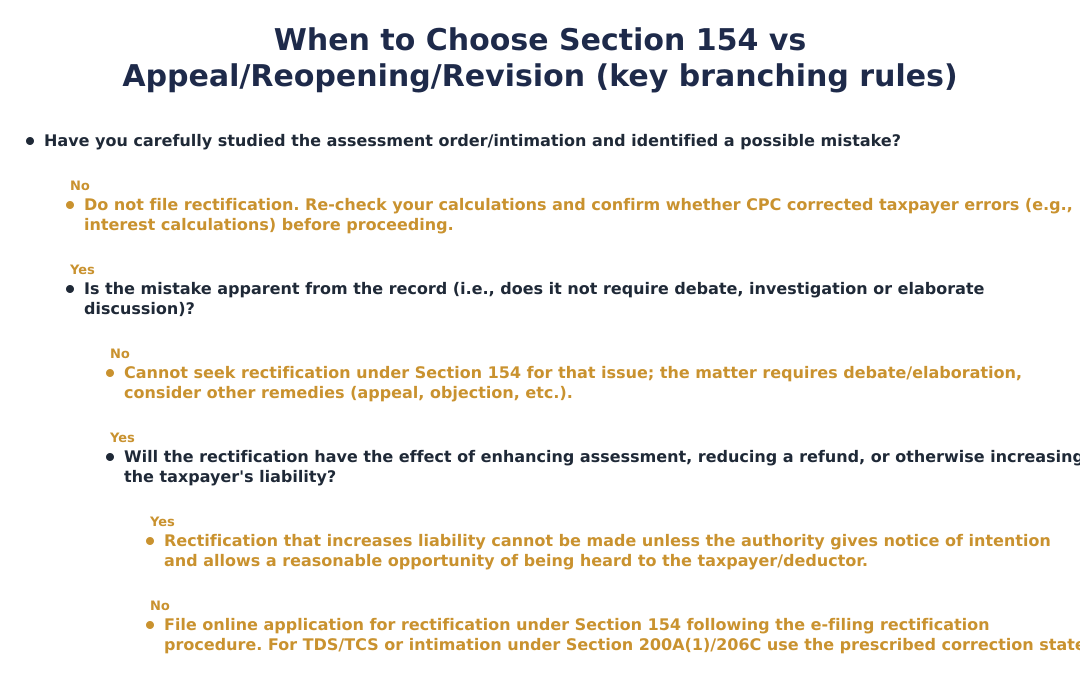
When you should (and should not) file a rectification
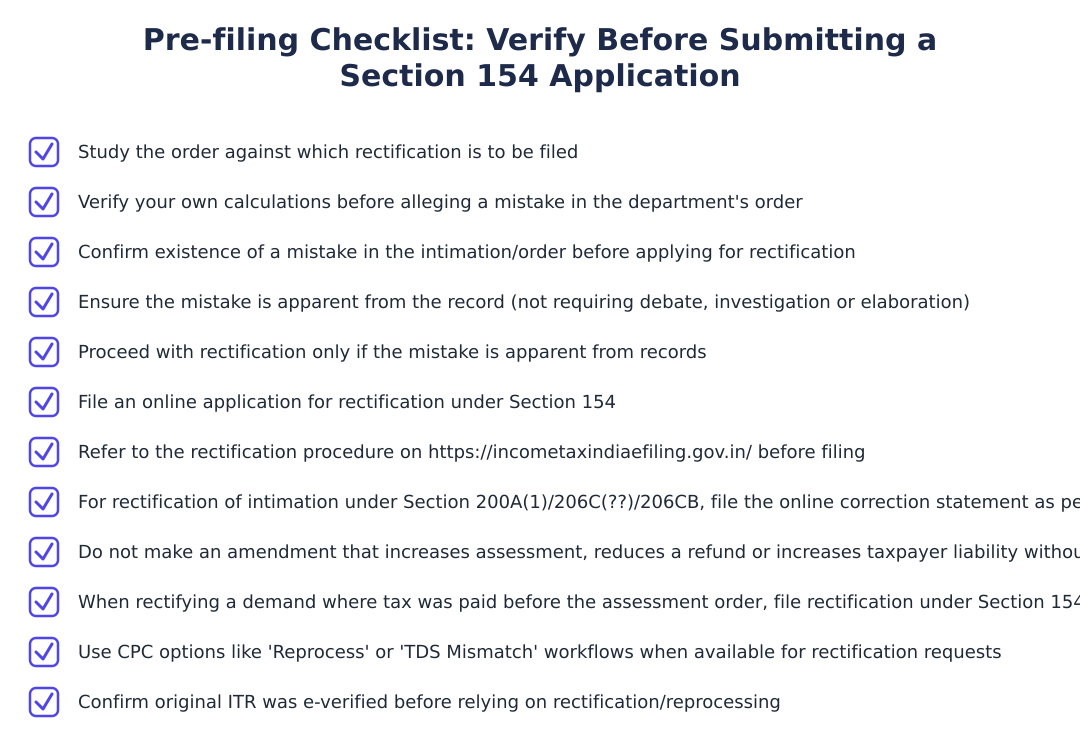
Before filing, carefully study the order or intimation against which you plan to apply for rectification. Frequently, what appears to be an error in the department’s order is in fact an error in the taxpayer’s original computation, for example, incorrect interest calculations in the filed return that the CPC corrected in the intimation. Only file when you can point to a mistake that is apparent from the records.
Do not use rectification when the issue requires debate, further verification, or new evidence. If the issue involves factual disputes, the correct course may be a different remedy (appeal or revision) rather than a rectification application. Filing rectification for non‑apparent mistakes leads to unnecessary delays and is often unproductive.
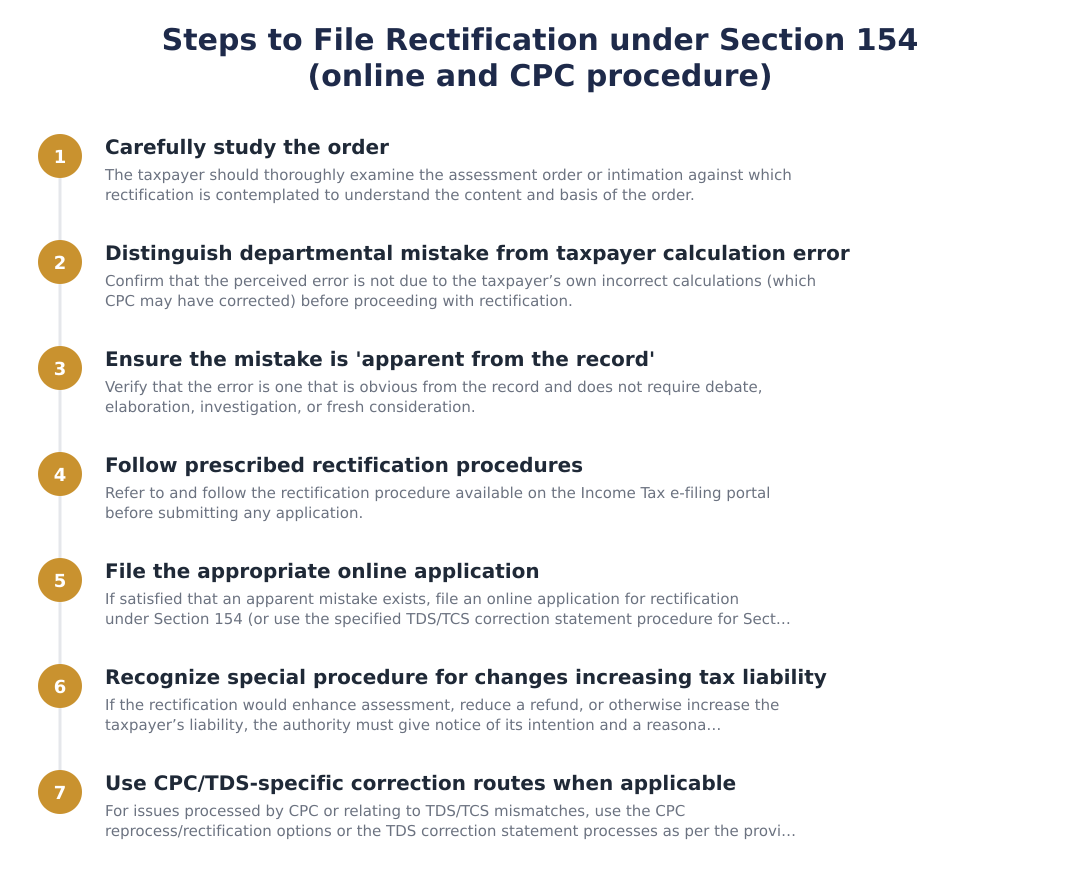
How to file, practical steps
Confirm that the error is apparent from the record and not due to your own miscalculation or a matter requiring fresh inquiry.
Collect documents or screenshots that show the correct computation or the source of the apparent mistake so you can demonstrate the error clearly.
You can file an online application for rectification. Before submitting, refer to the rectification procedure published on the e‑filing portal at https://incometaxindiaefiling.gov.in/.
Once filed, the department will examine the claim. If the proposed rectification would enhance assessment, reduce refund or increase liability, the taxpayer must be given notice and a reasonable opportunity of being heard.
Rectification for TDS/TCS intimations (Section 200A / 206CB)
Intimations under provisions dealing with TDS/TCS (Section 200A(1) / 206CB) have a distinct mechanism: for rectification of such intimations, an online correction statement must be filed as per the prescribed procedure. The department provides a dedicated procedure and tutorial for filing correction statements at the TDS CPC portal.
Follow the correction statement e‑filing procedure explained at http://contents.tdscpc.gov.in/en/filing-correction-etutorial.html. Using this prescribed route is essential because these intimations are handled under a different operational workflow than standard income‑tax intimations processed by CPC.
If rectification increases assessment or reduces refund
If the proposed rectification will have the effect of enhancing the assessment, reducing a refund or otherwise increasing the liability of the taxpayer (or deductor), the law requires that the authority give notice of its intention and allow a reasonable opportunity of being heard before making such amendment. This is a procedural safeguard that protects taxpayers from unilateral adverse changes without hearing.
Practically, this means that if your rectification application could result in higher tax demand, expect the assessing authority to issue a notice and provide an opportunity for you to respond before passing a final rectification order. Use that opportunity to submit clarifications or documents to avoid an adverse outcome.
Rectification under Section 154 is a focused remedy for clear, record‑evident mistakes. Before you file, verify that the error is apparent from the records, follow the e‑filing procedure on the income‑tax portal, and use the TDS/TCS correction route where applicable. Remember that any rectification that raises liability cannot be imposed without notice and a hearing; keeping thorough documentation and responding promptly to departmental notices improves the chances of a favourable outcome.
Frequently asked questions
What is rectification under Section 154 and when can I use it?
Rectification under Section 154 is an application to correct a mistake apparent from the record in an assessment order, intimation (like u/s 143(1)) or a TDS/TCS processing statement, and you can use it when the error is obvious from the record and does not require investigation or debate. Typical uses include mathematical mistakes, incorrect interest calculations corrected by CPC, or clerical errors in the intimation; it cannot be used to reopen issues that need fresh inquiry or change of opinion. If the rectification will increase tax liability, reduce a refund or affect a third party, the assessing authority must give notice and an opportunity of being heard before making the change. Online filing is allowed (via the Income Tax e-filing portal) and specific procedures exist for TDS/TCS or sections like 200A(1)/206C corrections.
Who can file a rectification application under Section 154?
A rectification application under Section 154 can be filed by the taxpayer (assessee) or the tax authority concerned against an order or intimation that contains a mistake apparent from the record. This includes cases where the CPC has processed returns and issued intimation u/s 143(1), or where TDS/TCS processing statements contain errors. If the proposed rectification will increase the assessee’s tax or reduce a refund, the authority must issue a show-cause notice and allow the assessee (or deductor) a reasonable opportunity of being heard before making the amendment. The taxpayer should first carefully study the order to confirm that the error is indeed apparent and not a matter needing debate.
What mistakes qualify as "apparent from the record" for Section 154?
Mistakes apparent from the record are clear, self-evident errors such as arithmetical mistakes, incorrect tax computation in the return versus intimation, typographical mistakes or clerical slips that can be corrected without further inquiry. For example, if the taxpayer miscalculated interest in the return and CPC corrected it in the intimation, that correction is an apparent mistake; however, a disputed addition requiring factual investigation is not. The taxpayer must ensure the perceived error is demonstrable from documents on record because matters requiring debate, elaboration, or new evidence cannot be rectified under Section 154. If in doubt, study the order and relevant records before filing the online rectification application on the e-filing portal.
What is the time limit to file a rectification application under Section 154?
The standard time limit to file a rectification application under Section 154 is one year from the date of the order sought to be rectified; however, specific provisions or judicial precedents can affect the period in certain situations. For example, rectifications arising from processing statements or TDS/TCS corrections should follow the prescribed timelines and procedures available on the CPC/TDS portals. If the rectification increases tax or reduces refund, the authority’s notice-and-hearing requirement applies regardless of the time limit for filing by the assessee. Always check the latest income tax portal guidance and any relevant circulars before filing online.
Can rectification under Section 154 be used to reduce a demand raised in u/s 143(1)?
Yes, rectification under Section 154 can be used to correct an intimation under Section 143(1) and thereby reduce an incorrect demand if the change is a mistake apparent from the record, such as an overlooked deduction or a tax payment reflected in Form 26AS. For instance, if TDS or tax paid was shown in Form 26AS but not allowed in the intimation due to a processing error, you can file a rectification online seeking reprocessing or TDS mismatch correction. If CPC or the assessing authority still refuses, further remedies include filing a grievance with CPC, raising a rectification objection with supporting evidence, or pursuing appellate remedies if rectification is denied. Always attach clear proof (26AS, payment challans, audit report) when seeking rectification for demand reduction.
Will a rectification that increases my tax liability be made without notice?
No, an amendment or rectification under Section 154 that has the effect of enhancing assessment, reducing a refund, or otherwise increasing the taxpayer’s liability shall not be made unless the authority gives notice of its intention and allows the taxpayer or deductor a reasonable opportunity of being heard. This is a statutory safeguard meaning the department cannot unilaterally raise your tax demand via rectification without issuing a show-cause notice and hearing you first. If you receive such a notice, you should respond with supporting documents or objections within the time specified; failure to respond may allow the department to finalize the rectification. This rule also applies when rectification impacts third parties (e.g., deductors) or where tax recovery will increase as a result.
How do I file a rectification application online and what procedures apply for TDS/TCS?
You can file a rectification application online on the Income Tax e-filing portal following the rectification procedure there; for intimation u/s 143(1) the portal provides a 'rectification' or 'reprocess' option, while TDS/TCS corrections require filing a correction statement through the TDS/TCS online procedures (e.g., procedures at contents.tdscpc.gov.in). Before filing, carefully study the order to confirm the mistake is apparent from the record and gather documentary proof such as Form 26AS, payment challans or corrected statements; incorrect use of rectification where CPC has already corrected a taxpayer’s error should be avoided. Specific guidance and e-tutorials are available on the CPC and Income Tax e-filing sites for rectifying TDS/TCS mismatches and section 200A(1)/206C corrections. Maintain copies of submissions and acknowledgement receipts for follow-up and potential grievances.
What should I check before filing a Section 154 rectification application?
Before filing a Section 154 rectification, you should carefully study the assessment order or intimation to confirm that the perceived mistake actually exists on the record and is not due to your own wrong calculations or a matter requiring investigation. For example, taxpayers sometimes think CPC made an error when in fact their original ITR computation (like interest calculation) was incorrect and CPC corrected it; such corrected entries do not warrant rectification by the taxpayer. Also confirm the mistake is apparent (arithmetical or clerical) and not a substantive dispute, and follow prescribed online procedures; if the rectification would increase tax, expect a show-cause notice and an opportunity to be heard. Consulting the rectification procedure on incometaxindiaefiling.gov.in and retaining proof will help avoid frivolous or futile rectification filings.
If rectification under Section 154 is rejected, what are my next remedies?
If a rectification application under Section 154 is rejected, you can file a grievance with CPC, re-examine the order for alternative grounds (such as filing an appeal against the assessment order), or, if appropriate, challenge the rejection before the Commissioner (Appeals) or the Income Tax Appellate Tribunal; remedies depend on the facts and whether the issue is appealable. For TDS/TCS matters, you may file correction statements or challenge non-allowance of credits through the prescribed TDS grievance/correction processes and preserve proof like Form 26AS and payment challans. If the rejection relates to a dispute of facts or law (not an apparent mistake), the correct route is often filing an appeal rather than a rectification petition. Always act within statutory timelines for appeals or further proceedings and keep records of all submissions and acknowledgements.
Need help staying Income Tax compliant?
MoneyGence's AI Finance OS tracks your compliance, wallet share, and finances in one place, built for agencies and growing businesses.
Get started with MoneyGence