Experience Letter Sample – Free Template & Format
An experience letter is a formal document issued by an employer that summarises an employee’s tenure, role and the work they performed while at the organisation. For jobseekers, consultants and professionals changing roles, an experience letter is often a key piece of evidence that validates claims made on a résumé and helps prospective employers understand the candidate’s background quickly. This guide explains what an experience letter typically contains, why it matters during recruitment and career transitions, and how to ensure the letter communicates the right information professionally. Whether you are an HR professional drafting letters for departing employees or an employee requesting one, understanding the components and uses of an experience letter helps make the document clear, credible and useful for future opportunities. In the sections that follow you will learn what an experience letter is, the principal ways it benefits employees and employers, and the common elements that good experience letters include. The guide focuses on practical advice: what to check before accepting or issuing a letter, how to request corrections, and what employers usually expect to see in a concise and professional document. By the end of this article you should be able to recognise a complete experience letter, draft one that reflects actual performance and responsibilities, and use it effectively when applying for new roles.
What is an Experience Letter?
An experience letter is a written confirmation from an employer that an individual worked at the organisation for a specified period and performed certain duties. It is typically printed on company letterhead, signed by an authorised representative, and supplied to employees when they leave the organisation or upon request during employment. The document serves as an employment record that summarises the relationship between the employee and the employer.
Beyond simply confirming employment, an experience letter often highlights the employee’s job title, key responsibilities, and notable contributions. It may be concise or detailed depending on company practice and the circumstances of the employee’s departure. The tone and content should be factual and free from subjective judgment, focusing on verifiable aspects of the employee’s work history.
How is an Experience Letter useful?
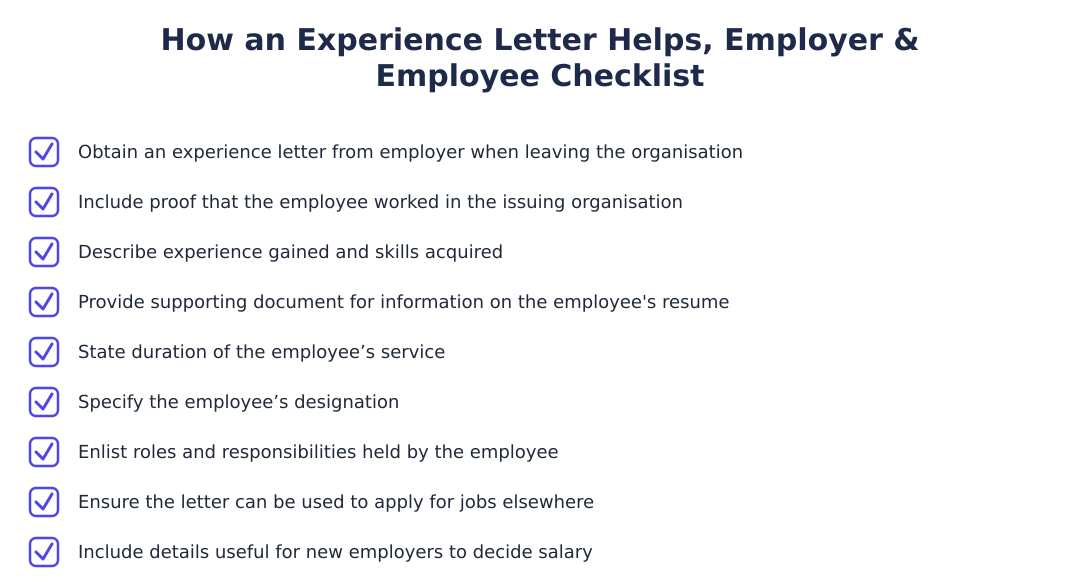
For employees, an experience letter substantiates the claims made in a résumé and provides prospective employers with a quick summary of past roles and responsibilities. Recruiters and hiring managers use the document to corroborate dates of employment and job titles, and to assess whether an applicant’s experience aligns with the requirements of a new role.
Employers also benefit from issuing experience letters: they provide a standardised, professional exit record and help maintain good alumni relations. A clear, factual letter reduces ambiguity for future employers and can expedite background checks. Additionally, having a consistent process for issuing experience letters supports transparent HR practices and helps avoid disputes about employment history.
What are the Contents of an Experience Letter?
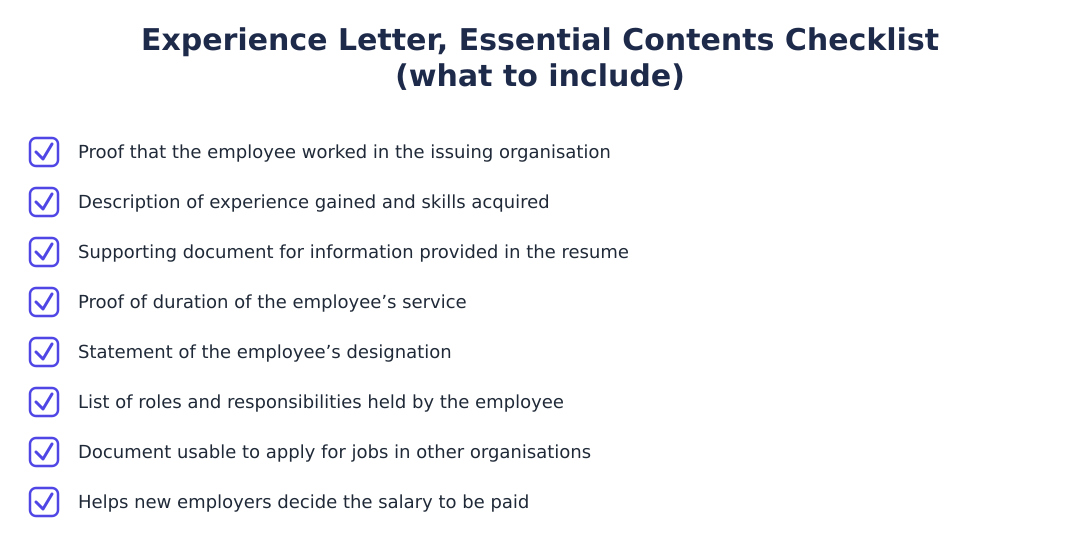
A complete experience letter typically contains certain core pieces of information presented in a straightforward manner. These commonly include the employee’s full name, the period of employment, the job title or titles held, and a brief description of responsibilities or primary duties. Including the name and designation of the signatory and an official company stamp or letterhead helps to authenticate the document.
Many employers also include an objective statement about the employee’s performance or achievements, written in neutral, verifiable terms. Where appropriate, the letter may specify reporting relationships, major projects handled, or technical skills demonstrated. It is advisable to avoid subjective or unsubstantiated praise and to stick to factual descriptions that can be confirmed if necessary.
Employees requesting an experience letter should review the draft for accuracy, check names, dates, titles and the description of duties, and ask for corrections if anything is incorrect or incomplete. Employers should aim to keep the letter concise and professional, ensuring it reflects the actual working relationship and provides useful information for future employment checks.
Best Practices when Drafting or Requesting an Experience Letter
When drafting an experience letter, use clear language and keep the document brief but comprehensive. Place factual details, such as roles and dates, near the top so they are immediately visible. Avoid ambiguous phrasing and ensure the signatory is someone authorised by the organisation to confirm employment.
Employees requesting a letter should provide a concise template or bullet points summarising their roles and dates to make the HR process smoother. If a particular employer requires specific wording, communicate that requirement politely and provide a rationale. Both parties should preserve copies of the final signed letter for future reference.
An experience letter is a small but powerful document that connects past employment with future opportunities. Keeping the letter factual, concise and properly authorised makes it a reliable tool for employees and employers alike. By understanding the typical contents and following straightforward best practices when drafting or requesting the letter, you ensure it serves its purpose effectively in career transitions.
Frequently asked questions
What is an Experience Letter?
An experience letter is a document issued by an employer to an employee, usually when the employee is leaving the organisation, that certifies the work done and the experience gained by the employee in the organisation. It is often issued on company letterhead and may also be called a ‘Service Certificate’. The letter typically includes the employee’s name, tenure of service, designation, and a summary of roles and responsibilities to validate the employee’s employment history and skills. Employers and future recruiters commonly use it as proof of previous employment.
How is an Experience Letter useful for getting a new job?
An experience letter is useful because it serves as proof that the employee worked at the issuing organisation and details the experience and skills acquired, which supports the claims on a resume. It also confirms the duration of service and the designation held, helping recruiters assess seniority and fit for a role. Additionally, it lists roles and responsibilities which guide new employers in deciding an appropriate salary and job level for the candidate. Employers often rely on it as an official supporting document during background verification.
What are the essential contents that must appear in an Experience Letter?
An experience letter should at minimum include the name of the organisation (preferably on letterhead), date of issue, name of the employee, tenure of service, designation, and a clear description of roles and responsibilities. Including the dates of joining and relieving helps prove the exact duration of employment, while a summary of duties demonstrates the skills and experience gained. The letter may also mention achievements or conduct, and is normally signed by an authorised person from the organisation. These elements together make the letter a credible supporting document for future job applications.
When should an employee request an Experience Letter from their employer?
An employee should request an experience letter when they are leaving the organisation, ideally at the time of resignation or on the last working day, so the document reflects the correct date of issue and tenure. Requesting it during the exit process ensures timely issuance and allows the employer to include accurate details like final designation and dates of service. If delayed, employees might face difficulty in obtaining it later or getting accurate information recorded. Keeping a copy helps for future job applications and verifications.
Can an Experience Letter be used as proof of employment for background verification?
Yes, an experience letter can be used as an official proof of employment during background verification because it confirms that the employee worked at the issuing organisation and states tenure, designation, and responsibilities. Recruiters and verification agencies accept it as supporting documentation that corroborates resume claims, especially when it is on company letterhead and signed by an authorised person. However, some employers may still contact the previous employer directly for additional confirmation. A complete letter with dates and roles strengthens the verification process.
Does an Experience Letter need to be on company letterhead and signed?
Yes, an experience letter is most credible when issued on the organisation's official letterhead and signed by an authorised representative, because these elements validate the authenticity of the document. The letterhead establishes the issuing entity and the signature confirms that an authorised person attests to the information such as tenure, designation, and responsibilities. Without letterhead or signature, employers and verification agencies may question its legitimacy and request additional proof. Including the date of issue further strengthens the document’s validity.
What should I check for when I receive my Experience Letter?
When you receive your experience letter, check that your name, exact dates of joining and leaving (tenure), designation, the roles and responsibilities listed, and the date of issue are all accurate and spelled correctly. Also verify that the letter is on official letterhead and bears the signature and name/designation of the authorised signatory. Any errors should be corrected by the employer before you accept the letter, because future recruiters will use it to verify your employment history and determine job fit and salary. Keeping a copy of the final, signed letter is important for future applications and background checks.
Can an Experience Letter be used internally for promotions or transfers within the same organisation?
Internally, an experience letter can support applications for promotions or transfers by documenting the employee's tenure, past designation, and list of responsibilities that showcase suitability for an advanced role. While it is most commonly used when leaving an organisation, the documented record of skills and duties helps internal decision-makers assess experience level and fit for new positions. However, internal HR records and appraisals are often used alongside or instead of an experience letter for such decisions. Providing the letter as part of an internal application can still strengthen the employee's case.
Need help staying Finance Templates compliant?
MoneyGence's AI Finance OS tracks your compliance, wallet share, and finances in one place, built for agencies and growing businesses.
Get started with MoneyGence