Hiring First Employees for Startup: Guide to Recruit & Onboard
Hiring your first few employees is a pivotal step in turning a solo venture into a scalable business. This guide walks founders and early-stage business owners through what to consider before recruiting, how to design job roles and the hiring process, practical ways to find and evaluate candidates, and how to onboard and retain the right people. You will learn how to check whether your business is ready to add staff, craft clear role descriptions, set up basic hiring infrastructure, run structured interviews, and create an onboarding experience that accelerates new hires’ productivity. The focus is on pragmatic actions you can take with limited resources, so you avoid common early-stage hiring mistakes and build a foundation for sustainable growth.
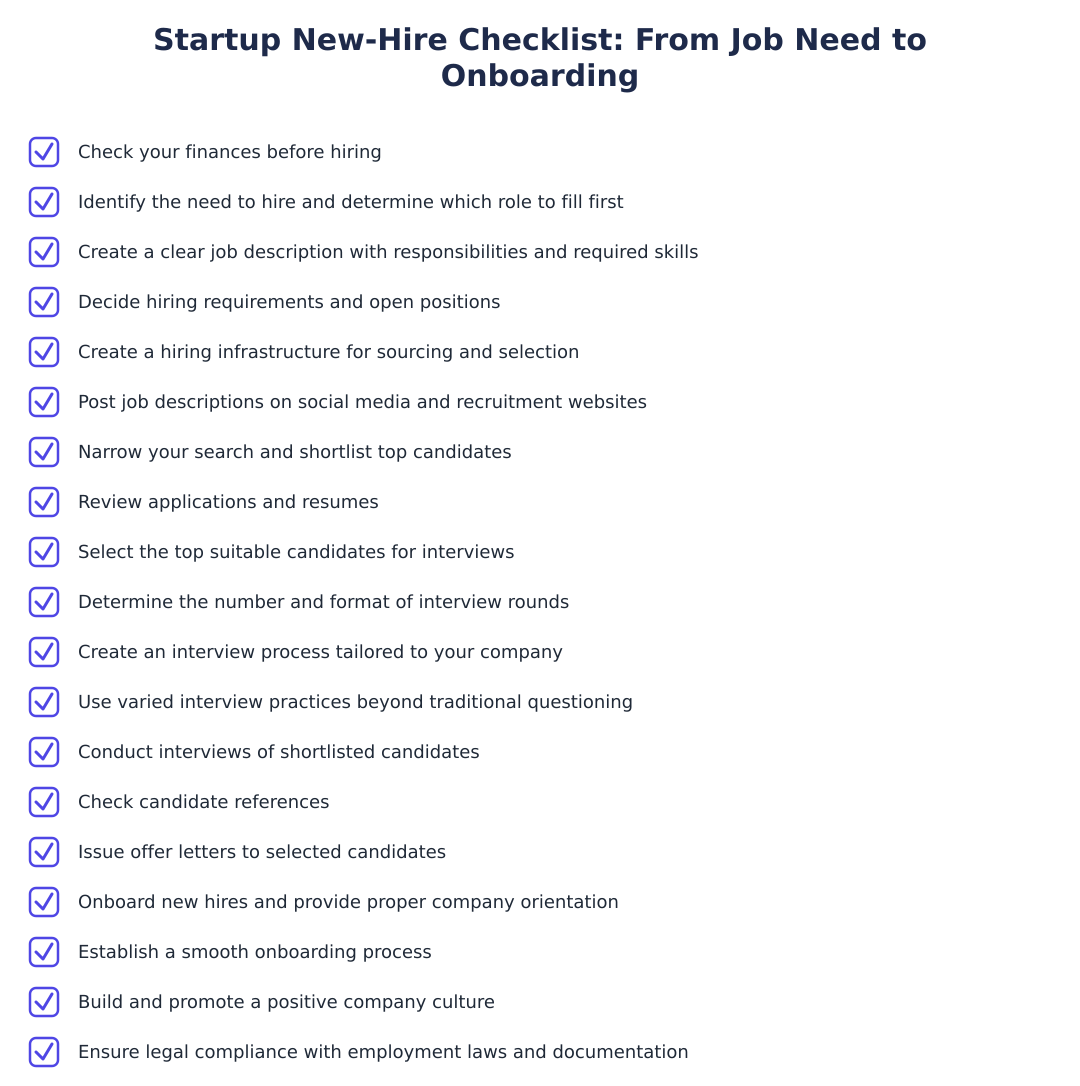
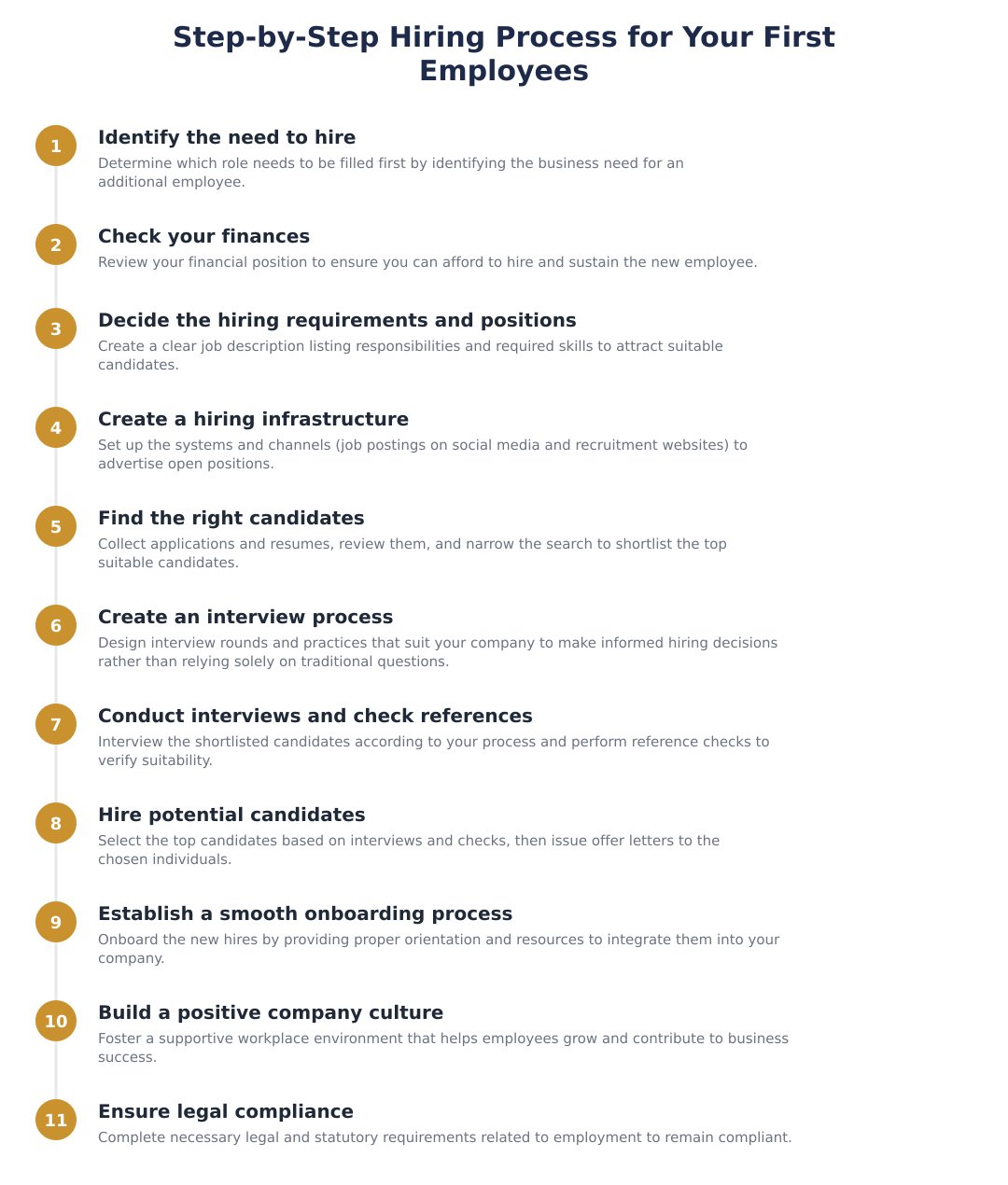
Check Your Finances
Before starting the hiring process, review your cash flow and budget to ensure you can support additional payroll and associated costs. Consider both recurring costs such as salaries and benefits and one-time costs like workstation setup or recruitment expenses.
Think about the funding runway you have and how long you need to sustain new hires. Hiring when finances are uncertain can create pressure on the business, so align hiring timelines with realistic revenue forecasts or funding plans.
Decide the Hiring Requirements and Positions
Define the problem you want a new hire to solve rather than focusing only on a job title. Translate that into a clear job description that outlines core responsibilities, required skills, and expected outcomes. This clarity helps attract candidates who are aligned with your needs.
Prioritise roles that will have the most immediate impact on your product, customers, or revenue. For early hires, flexibility and a willingness to wear multiple hats are often more valuable than narrowly specialised experience.
Create a Hiring Infrastructure
Set up simple processes and tools to manage applications and communications. This can include a standard job posting template, an email or applicant tracking method, and a consistent way to evaluate resumes and portfolios.
Decide who will be involved in hiring decisions and what each person’s role will be, for example, who screens resumes, who conducts interviews, and who makes the final offer. Having this structure reduces delays and keeps candidates engaged.
Finding the Right Candidates
Use a mix of channels to source candidates: your professional network, employee referrals, targeted job boards, and social media. Referrals often yield faster and better cultural fits for early-stage teams.
Craft job posts that communicate your company mission, the role’s impact, and the working style. Clear expectations and an honest portrayal of the role and its challenges help attract candidates who are motivated by what you offer.
Create an Interview Process
Design a short, structured interview process that assesses both skills and cultural fit. Use practical tasks or work samples where possible to evaluate how candidates approach real problems they would face on the job.
Define evaluation criteria in advance and use consistent questions or tests across candidates. This reduces bias and makes it easier to compare applicants objectively, especially when hiring at a small scale.
Hire Potential Candidates
When you select a candidate, move quickly to communicate the offer and be transparent about role expectations, compensation structure, notice periods, and any probationary terms. Early-stage candidates value clarity and responsiveness.
Be prepared to negotiate aspects of the offer and to explain how the role could evolve. For small teams, outlining growth opportunities and potential responsibilities can help close candidates who are looking for meaningful involvement.
Establish a Smooth Onboarding Process
Design an onboarding plan that helps new hires become productive quickly. Include an orientation to the company mission, key processes, tools they will use, and introductions to team members.
Assign a buddy or mentor who can answer day-to-day questions and help the new employee navigate the informal aspects of the workplace. Early support improves retention and accelerates contribution.
Build a Positive Company Culture
Culture is created through everyday actions. Set norms around communication, decision-making, feedback, and work-life balance that reflect the values you want to promote.
Encourage transparency and regular check-ins so that employees feel heard and aligned. For small teams, a strong, intentional culture helps attract and retain people who will support long-term growth.
Ensure Legal Compliance
Understand basic employment obligations relevant to your location before you onboard staff. Put written agreements in place that cover the core terms of employment and any confidentiality or IP expectations.
Keep simple records of recruitment steps, offers, and onboarding documents. Compliance and clear documentation protect both the business and employees as the team grows.
Hiring your first employees is a learning process. By preparing financially, defining clear roles, setting up repeatable hiring practices, and creating a supportive onboarding and culture, you increase the chances of finding team members who will help scale your business. Start small, iterate on your processes, and treat hiring as an investment in your company’s future.
Frequently asked questions
When is the right time for a startup to hire its first employee?
You should hire your first employee once you have established a basic hiring system and confirmed your finances can support payroll and associated costs. Specifically, ensure you have a sustainable cash runway to cover salary, recruitment costs, onboarding expenses and statutory employer contributions for at least several months. Also prioritize hiring when a clear, recurring business need exists that founders cannot handle without hurting growth or customer service. For example, hire when sales or product tasks consistently bottleneck progress and you can define a measurable role to fix it.
How do I decide which roles to hire first in my startup?
Decide roles to hire first by identifying the most critical gaps that limit growth and mapping them to specific job requirements and outcomes. Start with positions that directly affect revenue or product delivery, such as sales, customer success, or core engineering, and create concise job descriptions listing responsibilities, must-have skills and measurable goals. Prioritize hires that complement the founders' strengths and will deliver the largest impact per cost, for example hiring a sales rep if converting leads is your main growth barrier. Re-evaluate after each hire to ensure subsequent roles align with evolving needs.
What should a small startup include in its hiring infrastructure?
A hiring infrastructure should include clear job descriptions, a candidate tracking process, interview templates, and offer/onboarding paperwork to create repeatable hiring decisions. Use simple tools like a shared spreadsheet or affordable ATS to track applicants, standardized interview scorecards to compare candidates objectively, and pre-drafted offer letters and employment agreements to speed closure. Also set processes for reference and background checks, and designate who in the team makes final hiring decisions to avoid delays. Even lightweight systems save time and reduce hiring mistakes as you scale from one to a few employees.
Where should I look to find the right candidates for my first few hires?
Find candidates by posting clear job descriptions on targeted job boards, social media, industry groups, and through employee referrals to reach both active and passive candidates. Prioritize channels where your target talent spends time, technical roles on developer communities, sales roles on LinkedIn and local networks, and incentivize referrals to tap networks quickly with lower cost. Also proactively search candidate profiles and reach out with a concise message describing the opportunity and impact to attract higher-quality applicants. Screen applications against your must-have criteria to quickly shortlist top fits.
How should I design the interview process for early hires?
Design an interview process with defined rounds, objective evaluation criteria, role-relevant tasks and time limits to make informed, consistent hiring decisions. Typically include a phone screen for fit, a technical or work-sample assessment to evaluate skills, and a final cultural or leadership interview with a founder; use scorecards to rate candidates against required competencies. Keep the number of rounds lean (2–3) to avoid losing candidates due to long cycles, and communicate timelines and feedback promptly. For example, a developer hire might have a 30-minute phone screen, a take-home coding assignment, and a 60-minute final interview with the CTO.
What checks should I do before making an offer to a candidate?
Before issuing an offer, perform reference checks, verify employment history and confirm any required qualifications or background checks to validate a candidate's claims. Call at least two professional references focused on recent roles and ask about performance, reliability and areas for improvement; complete employment or certificate verification as relevant. Ensure compensation, start date and key employment terms are approved by founders and documented in a written offer letter to prevent misunderstandings. If the role requires regulatory compliance (licences, security clearances), confirm those are in order prior to finalising the hire.
How do I onboard my first few employees effectively?
Onboard first hires by providing a structured orientation, clear role objectives, necessary tools/access, and a 30–90 day success plan to help them become productive quickly. Prepare their workspace, accounts, and equipment before day one, assign a mentor or buddy for initial support, and schedule meetings to introduce company mission, processes and key stakeholders. Set measurable early milestones and weekly check-ins during the first three months to track progress and address issues promptly. Well-planned onboarding reduces churn and accelerates value delivery from new employees.
How can founders build a positive company culture from the start?
Founders can build positive culture by explicitly defining core values, modelling them daily and hiring people whose behaviours align with those values. Create transparent communication, regular feedback loops, recognition for good work, and simple rituals (weekly check-ins, shared demos) to reinforce desired norms. Make culture-building a deliberate part of every hiring and onboarding conversation so new employees understand expected behaviours from day one. Remember culture evolves with actions, small consistent practices shape long-term employee experience more than broad slogans.
What legal and compliance steps must a startup follow when hiring employees in India?
When hiring in India, ensure compliance with labour laws by issuing a formal offer letter and employment agreement, registering for statutory contributions like EPF and ESIC if applicable, and maintaining records for payroll and tax withholding (TDS). Determine whether your workforce size and salary levels trigger mandatory registrations, EPF for establishments with employees above the threshold and ESIC for eligible salaries, and deduct and remit employee taxes and contributions timely. Also follow minimum wage, working hours, leave and termination rules relevant to your jurisdiction and keep documented policies to avoid disputes. Consult a legal or HR advisor to confirm which registrations and compliances apply to your startup's specific structure and state rules.
Need help staying Payroll compliant?
MoneyGence's AI Finance OS tracks your compliance, wallet share, and finances in one place, built for agencies and growing businesses.
Get started with MoneyGence